Show notes
What do you do when you want to buy a cafe but your country is collapsing around you?
Piano music composed and performed by James Harper
More episode information here: http://www.medium.com/@FilterStories
Sound mixing: Dom Edgley / http://www.domedgleysound.com/
Filter Stories logo: http://www.headquarters.studio/
A big thanks to: Cesar Eduardo Bermejo and Cesar Andres Bermejo of Brew Coffee Company, John Matías, Manual Barsallo of Paddle Coffee Roasters, Giancarlo Effio of Mentiritas Blancas
Editorial thanks: Tanya Newton, Tyler Wright, Jack Butcher, Adam Harper, Tom Jarz
Read the transcript
James Host: Venezuela. It’s a name that’s on the headlines almost everyday. Now, I feel a bit ignorant saying this but it’s a crisis I should know more about but it’s so far away and doesn’t really impact my life. Sometimes I figure I should at least try and understand what’s happening.
So, I go on Google, type in Venezuela
[James tapping away on keyboard].
James: Lets’ see typing in Venezuela crisis, what comes up?
James Host: And I watch these kind of videos.
James: Here we go, one of the top videos, top hits, Vox.
Vox video — the collapse of Venezuela explained: Venezuela was once the richest country in Latin America. It has the largest known oil reserves in the world and its democratic government was once praised worldwide but today Venezuela’s democratic institutions and its economy are in shambles. The country has the highest inflation rate in the world making food and medicine inaccessible to most Venezuelans. Over the last four years, it’s GDP has fallen 35%….
James Host: I don’t know — I’ve already zoned out. These numbers don’t land with me. They are just numbers. To make this faraway crisis feel closer I need to know what its like on the ground.
[Musical interlude]
Today, I am bringing you that story because I found two Venezuelan brothers — they’re young, barely 20 years old — who tried to buy a café in Caracas, the capital right as the Venezuelan economy is accelerating off a cliff. I should also mention that these aren’t two random Venezuelans. Where they are from, they are pretty famous.
Announcer: “Ladies and gentlemen, please put your hands together for the barista champion of Panama Cesar Eduardo Bermejo.
James Host: I’m James Harper and this is Filter Stories, the untold stories hidden in your cup of coffee.
[Filter Stories theme music]
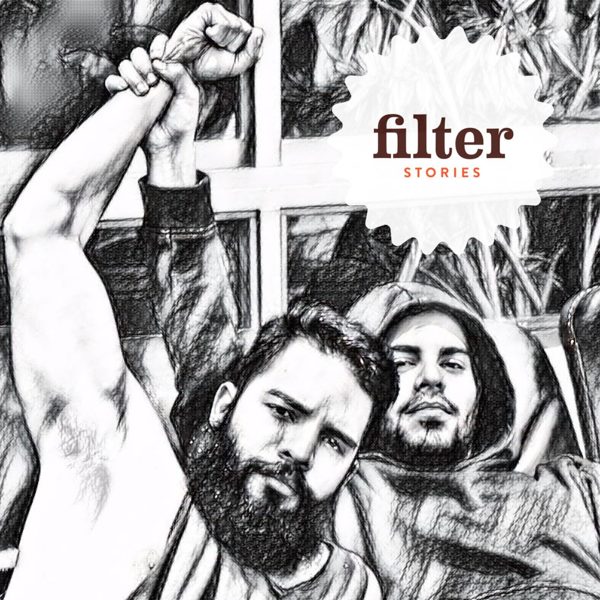
James Host: Okay, let’s meet the brothers. This is the older one.
Cesar Eduardo: I am Cesar Eduardo Bermejo Hernandez. That’s my entire name okay.
James: I am going to call him Eduardo. Keep it simple. As an aside, he likes to end every sentence with “okay.” He said 219 times during our interview.
Eduardo is a pretty typical older sibling — he does well in school, he’s reliable, organised, quite different from his younger brother Andres.
Cesar Eduardo: My brother was this crazy guy who didn’t like school, didn’t like college and he was like I don’t want to study because I don’t like to study, I just want to party, to drink, just to have fun.
James Host: And as you would expect Andres has some quite unflattering things to say about his older brother too.
Andres: Mi hermona no le pasiona. Mi hermano es una persona que no le pasiona.
Ginacarlo: So, the things that my brother, I could saythat he is not passionate about anything.
James Host: Translating Andres is my friend Giancarlo Effio. Alright, so these brothers, very different but you put them together and they’re quite the team.
Andres:… Yo tengo un dicho, mi hermano y yo…
Giancarlo: So, we have a joke, my brother and I. It’s this image in which we see the world and I have the lower hand holding the world and he has the upper one holding it also. We are way more powerful and stronger together.
James Host: In the 2010s, Eduardo, the older brother, has a dream.
Cesar Eduardo: I remember that I told my brother I want to have a business. Let’s do something. Let’s try with a coffee shop.
James Host: These ying-yang brothers now have one thing in common. They are falling in love with coffee.
Cesar Eduardo: My step-father bought an espresso machine for the house and we really liked it a lot and we just said hey, let’s find a coffee course.
[upbeat music plays]
So, we went to the Venezuelan Coffee School and we started practicing at home. We started making cappuccinos all day.
James Host: Afternoons, weekends, for years they learned how to run a café. Andres, the younger brother, completes sommelier courses, baking classes. Eduardo, the older one reads book after book.
Cesar Eduardo: We took four years preparing for this shop okay.
James Host: After four years, they are ready to go except for the minor issue of money. They don’t have enough. [Music starts] Eduardo, the responsible older brother is on the case. He starts hustling, paints walls, run errands in the hospital where his mother works, washes cars but it’s going to take a long, long time. He needs a quick fix. Enter, Nicolas Maduro.
News reporter: Venezuelas president Nicolas Maduro has been declared winner of Sundays election. 14 Latin American countries do not recognise the result. Paula Newton joins us from…
James Host: It’s 2013 and Nicolas Maduro is now in charge of Venezuela. There are many, many ways that he and his cronies make themselves super rich. One way is through the exchange rate.
James Host: Buying and selling US dollars is illegal because the government wants to control the exchange rate.
[Music starts]
But, there is a loophole. There is a difference between the official government rate and the unofficial blackmarket rate. Making money is easy. You buy dollars low on one, you sell them high on the other. The economic consulting firm Ecoanalítica estimates that tens of billions is stolen by the Maduro and his political allies using this exchange rate trick. But also, many ordinary Venezuelans are doing this as well but Eduardo has no idea this trick exists until one day he’s bored, clicking through Facebook.
Cesar Eduardo: … and I found this big website where all these people were trading dollars and bolivars. So, I say wow, this is a new thing. I buy dollars cheap and sell dollars at a higher price. So, I did that for an entire year.
James Host: By 2014, Eduardo has enough money to open his café.
Cesar Eduardo: Iremember with all the painting thing, the washing car thing, the dollar thing, the ministry thing, one day I was with $25,000.
James Host: The brothers start hunting Caracas for a café to buy.
Cesar Eduardo: So, I was like hey let’s do it.
James Host: In some ways Venezuela’s crisis is working out for them. Eduardo, the older brother has all the money so he takes the lead. Soon after, he finds a cafe but….
Cesar Eduardo: I don’t like this. It wasn’t my entire design at all.
James Host: Keeps looking and then and then number 2.
Eduardo: Okay, it was a really nice place. It was a lot of white walls. I remember this beautiful oven.
James Host: Eduardo is about to squeeze the trigger but his friend, the exchange rate, turns against him.
News reporter: President Maduro is playing around with the exchange rate system. They’re trying to fix the crazy inflation rate. A $1 coffee last year might cost you $250 this year and, for a moment Venezuelans think this might actually work. For the first time in two years, the bolivar gets stronger against the dollar.
Cesar Eduardo: So, that wasn’t good news for me because I had to pay more dollars for the same shop.
James Host: But Eduardo is relaxed about it.
Cesar Eduardo: Okay, in two weeks we are going to hear that the dollar is back so let’s wait.
James Host: This is the oldest trick in the government’s book. When things go wrong, create a new system. But there’s a deep structural economic problem in Venezuela. Which ,by the way, the government is responsible for. partly because, Maduro and his inner circle are making so much money out of this chaos. Eduardo knows this new exchange rate system is a flimsy Band-Aid that won’t last. He goes home to tell his brother — I’m not buying that café but Andres, the younger brother, is not happy.
Andres: De mi informa, mi hermano me explico pero yo no entendida.
Giancarlo: So, he tried to explain that to me but I just didn’t get because I was like dude, you have the money, I see the money. Why are we not making the buy? What the hell is going on?
James Host: I know, I know his reaction doesn’t make much sense but he admits it himself — he was really young.
Andres: Y la financia no lo entendia. Yo no pagaban
Giancarlo: The things. I just couldn’t understand it by that time. I didn’t pay for my things so I just was not able to understand that reality.
James Host: But Andres is also getting stressed. It’s not easy being in Venezuela in 2014.
News reporter: Venezuela has once again been gripped by violent clashes.
Andres: Pero el problema. La situacion en Venezuela….
Giancarlo: I mean, the Venezuelan situation was getting worse.
James Host: Nicolas Maduro is pushing Venezuela one step closer to a dictatorship. Ordinary Venezuelans are angry. They can’t find toilet paper in supermarkets, inflation is out of control.
News reporter: With soaring inflation and rising crime are widely seen as being behind the unrest..
James Host: There are over 9000 protests in 2014.
News reporter: The countries current president derides those demonstrating as trying to insight revolution. but…
James Host: Maduro responds with violence.
Andres: El gobierno esta matando la gente.
Giancarlo: Students got killed. I saw that people got killed.
News reporter: This is just the latest of a wave of demonstrations of which 17 people have been killed in scenes of running street battles.
James Host: The whole situation gets to Andres
Andres: Psycologicamente me afecta…
Giancarlo: You get psychologically and emotionally damaged.
[music starts]
James Host: For Andres, Venezuela is almost a dead end and also in his job he works as a bartender but in Venezuela moneywise that’s also a dead end. The only way he can continue his middle- class life is to own a cafe.
Andres: Sencilamente, quien esta te quiero
Giancarlo: I am telling you this, you get broken. It’s so frustrating because you don’t know what to do. You feel lost and I came back 4am after a work shift. I was lying in my bed very awake crying, very frustrated.
Andres: Yo le dije a dios que esta pasando necesito que pero llorando…
Giancarlo: And he was saying like man you’ve got to tell me something because I don’t know what to do. I don’t find myself.
[musical interlude]
James Host: 18 year old Andres fights with his mother, father, brother, step-father. He’s becoming unbearable to live with. Once Eduardo buys a cafe, he can get his brother out of at least one of his dead ends. So, the exchange rate is flapping around and, in the meantime Eduardo keeps looking. He forgets about number two and then finds number three.
Cesar Eduardo: We love it. It was like a restaurant, a really small restaurant. It was perfect to give classes and catering
James Host: Eduardo is finally about to sign except for one thing.
Cesar Eduardo: But, the thing was I didn’t like the location because next to it was some kind of favela, we call barrio.
James Host: A very poor community. Another thing you need to know about Venezuela is that it’s very dangerous.
News reporter: These men have jobs but all of them also rob and kill to fund their way of life. In Venezuela crime ballooned during the last decade in spite of all…
[music plays]
James Host: A report from the U.S. Bureau of Diplomatic Security suggests most of the violence comes from organized street gangs. These are very marginalized Venezuelans. When oil prices were high and Venezuela was swimming in money, they hardly got a drop, so they turned to street gangs to make a living and under Maduro their crime shoots up. The police force is getting more corrupt, taking its cue from the government and the gangs pay off the police force.
So, imagine this: the brothers are about to open a fancy café next to a neighborhood filled with gangs. Eduardo looks into the future, does not like what he sees.
Eduardo: we are going to come every single day to this place but one day it’s going to happen, they are going to take one of us. That’s the thing, okay.
James Host: Eduardo tells the owner of the business I’m out and he goes back home to tell his brother it’s not happening. But Andres is reaching his breaking point.
Andres: Y sencilamente estoy frustrado, llorando del impotencia
Giancarlo: But he described me because he was like we are going to but the business. We are going to do it this time we are going to do it. They go, they come back and they say we didn’t buy it.
Andres: Three opportunities, tres veces
Giancarlo: Three time man, three times I had to go through that experience and that is what made the problem so big.
James Host: Eduardo, the guy with the money can’t believe what he’s hearing.
Cesar Eduardo: Okay, so he was really, really mad about it. He was like you are wrong, they are wrong. I have to have my business and you have to pay for my business.
James Host: Andres fights more and more with his family.
Andres: disputo con mi hermano, disputo con mi mama…
Giancarlo: Well, I had a very heavy argument with my brother, with my mom, with my stepdad and when I was on my way back I received a call from my mom and she said we changed the locks. You are kicked out. You are out man.
James Host: Andres is out of the house but then he decides to get out of Venezuela.
Andres: Yo, en principio me cree ir argentina.
Giancarlo: My first plan was to go to Argentina. The thing is that in Venezuela you couldn’t get tickets to Argentina.
News reporter: Landing in Caracas’ airport something seems to be missing on the tarmac and inside. The once bustling international terminal seems strangely empty.
James Host: Maduro’s mismanagement of the exchange rate is now throwing a wrench in the works of Andres’ plan to leave.
News Reporter: Venezuela’s Airline Association says foreign carriers are owed almost 4 billion dollars.
James Host: Basically, international airlines stop trusting Venezuela’s currency. They now only accept dollars. The problem is, dollars are very expensive and there’s just one flight Andres can afford.
Andres: Consigo boleto a panama y veni a panama
Giancarlo: So, I could get a ticket to Panama and that’s how I got here.
[musical interlude]
James Host: The brothers are now almost 1000 miles apart.
Cesar Eduardo: It was really hard because my brother and I were together every single day throughout our life and I didn’t know when I was going to see him again.
[musical interlude]
James Host: Venezuela has beaten the brothers but while in Panama, 18 year Andres begins to change.
Andres: …
Giancarlo: You grow up, and you become an adult. Everything changes from doing your laundry to buying your food to paying your bills. You have to pay for everything that is yours.
James Host: Andres gets a job in a specialty coffee shop in Panama City. Loves it and then he rekindles that idea of having a café with brother. But this time — they’re going to do it Panama.
Cesar Eduardo: I remember that he called me a lot, every day.
James Host: He finally persuades his older brother to come. and he’s desperate to prove he’s not a teenager anymore.
Andres: Yo le digo mi hermano no te tengo todo. No hs pagado habitacion…
Giancarlo: I have to make everything in my power to make him stay. I paid for everything. I arranged for him to be able to stay free for a month. If we went out to have dinner or something I paid for everything.
James Host: And it works! Eduardo moves Panama City. They put their heads down.
Cesar Eduardo: We were here hungry. We wanted to learn. We wanted to work.
James Host: And start shaking up Panama City’s kind of small coffee scene.
So, now the guy who has been translating for Andres all this time, he’s actually got a coffee shop of his own in Panama City. So, Giancarlo going to stop translating for Andres and now he is going to speak as himself.
Giancarlo: This is the thing that I thank them a lot. The raised the bar because everybody was so shocked at what they were doing that the other coffee shops, we had to work a lot to be able to step up the game to that point.
World Barista Championships announcements: Ladies and gentlemen please put your hands together for the barista champion of Panama, Cesar Eduardo Bremio.
James Host: So, Eduardo and Andres are both in Panama City. They compete in the Panamanian brewers and barista competitions. They beat the local favourites and then they fly across the world to represent Panama in these coffee competitions.
Cesar Eduardo: The first time I cupped this coffee I was shocked by the floral and citrus aromas.
James Host: And, you might be wondering how do the Panamanians feel about this?
Giancarlo: The community was pissed and I understand why they were pissed or why we were pissed.
James Host: This is Giancarlo speaking as himself again.
Giancarlo: Here in Panama right now we’re going through a very heavy Venezuelan immigartion so a lot of Venezuelans with a lot of wealth are coming to Panama, having businesses, taking over the market. I mean, it’s competition.
James Host: Two weeks ago, the brothers popped the corks and finally opened their cafe in Panama City. [musical interlude]. You could say it was eight years in the making. Meanwhile back in Venezuela the crisis has got worse and worse.
News reporter: It’s the gun that rules parts of Venezuela now. This is the only way of stopping looters in Maracaibo. After days of power cuts Maracaibo descended into anarchy. It was a free-for-all.
[musical interlude]
James Host: It’s estimated that 3 million Venezuelans fled their country by 2018 and that number is rising fast. Curiously, many Venezuelans choose to get trained up in hospitality jobs before they flee.
Cesar Eduardo: Most of the people that leave Venezuela, before leaving do a course.
James: Like insurance professions in case they have to leave in a hurry?
Cesar Eduardo: Exactly. So, they can work in a barber shop. they are good sommeliers or anything.
James Host: I started this episode saying that Venezuela’s catastrophe feels very far away but Venezuelans flee to the US, Europe, Panama. The crazy politics of a faraway country can affect us directly even as coffee drinkers because the barista who makes your coffee for you tomorrow morning could be Venezuelan.
[musical interlude]
Credits
Hello, I hope you enjoyed the episode. Greetings from El Salvador. I’ve been here almost a month, and I’ve been going deep into some very eye-opening realities in the coffee world. I’m really excited for these upcoming episodes (but also a little bit nervous).
I make all the piano music in the episodes and this time it was pretty challenging because I am in EL Salvador and all I could find was a 2002 Casio keyboard that I had to prop up on the hostels kitchen for about four hours. There will be a photo of this stupid setup in the next newsletter too .
Thank you so much to everybody who left a review on iTunes. If you haven’t already, please take a second to leave a review. It really helps keep Filter Stories alive.
Now two huge thanks.
One is to Dom Edgley, the sound wizard behind Filter Stories. If you need a sound person for anything, get in touch with him on https://domedgleysound.com/ and to Headquarters, the branding and packaging design team that created the Filter Stories logo. Visit their website to see all their work www.headquarters.studio.
This episode was recorded in Panama City. Now, I really recommend you visit Panama. For one, you can go see Tito’s farm and two you co do a coffee shop tour of Panama City. I recorded this episode in the cupping room ofPaddle Coffee Roasters. You can check out Giancarlos’ café…
Giancarlo: Okay, my café is Mentiritas Blancas and it’s amazing because we care about what we are giving you. We are a lot, we care way too much.
James Host: And, of course you can say hello to the brothers. Their café is called Brew Coffee Company.
You can follow my travels and get glimpses into upcoming episodes by following Filter Stories on Instagram. It’s @filterstoriespodcast or even on Twitter @filterstories.
Thanks you so much and I’ll speak to you next time.
Listen on Apple Podcasts, Spotify, Pocket Casts or your favourite app.
More from Human Stories
See allStateless
Mikhail is a specialty coffee barista. But he’s stuck on an island in the middle of the Pacific Ocean.
Sofía
What were your dreams at 16? Sofía lives on a remote coffee farm in Nicaragua and hers is to be a great english translator.
Aquiares
In Central America, you can’t tell the story of coffee without mentioning war.