Show notes
In Central America, you can’t tell the story of coffee without mentioning war.
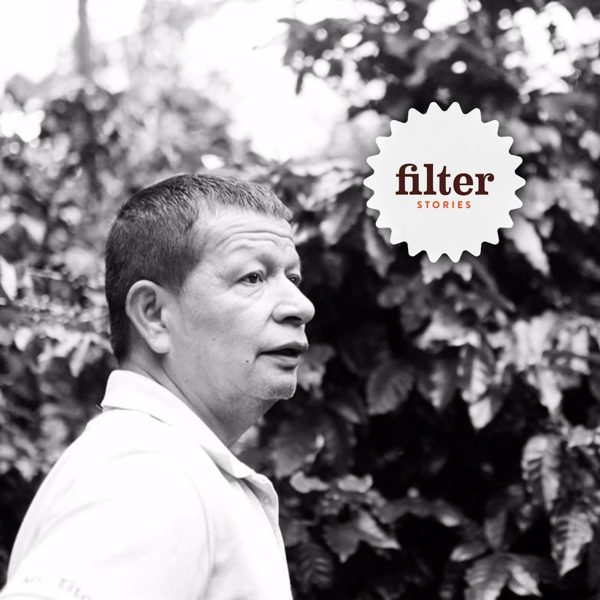
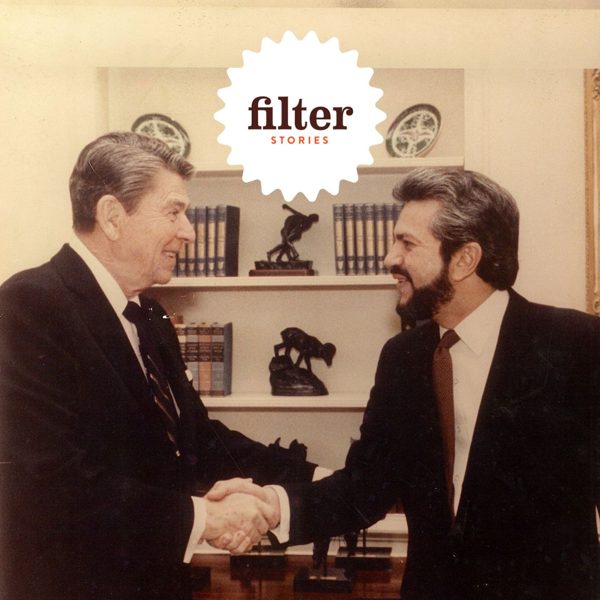
This is Alfonso. He's hugged Fidel Castro and President Reagan chartered a private plane so he could attend a photoshoot at the White House.
In the 1980s, Alfonso almost gets murdered three times for trying to bring democracy to Nicaragua.
And all the while, his sanctuary, the coffee farm “Aquiares", begins collapsing too.
This story reveals the blood and tears that could fill your morning cup of coffee.
Join the Kickstarter here: https://www.kickstarter.com/projects/jamesharper/filter-stories-youve-heard-the-story-now-taste-the?ref=30q5cc
More episode information here: https://medium.com/@FilterStories
Piano music composed and performed by James Harper
Sound mixing: Dom Edgley / https://domedgleysound.com/
Filter Stories logo: https://headquarters.studio/
A big thanks to: Ariel Bravo, the Robelos, Fabio Gadea Mantilla, Carlos Fernando Chamorro
Editorial thanks: Kinga Pecak, Daniel Orgera, Anja Krieger.
Read the transcript
Indiana Robelo: And you know what? All this situation in Nicaragua, he was frustrated because he dreamed like of helping this country more and he couldn’t.
James Host: This is Indiana Robelo, talking about her father Alfonso Robelo. A Nicaraguan politician in the 1970s and 80s. Alfonso would also eventually co-own and manage a Costa Rican coffee farm, a farm called Aquiares.
Indiana Robelo: Probably what I could not do in Nicaragua. I did it in Aquiares [laughs].
James Host: Maybe you have tasted a cup of a coffee Aquiares coffee before.
If you don’t remember the name, perhaps you remember the sweet fruity flavors. Well, in this story, we’re going to dive into that cup of coffee to discover where it came from. And on one level I could show you where it’s physically from, you know, the trees and the mill, but that’s not the full story.
Because you would not be enjoying Aquiares coffee in the first place were it not for Alfonso Robelo and his involvement in the Nicaraguan civil war.
We might think that coffee and war have nothing to do with each other, but in central America, you can’t tell the story of coffee without mentioning war.
And this story reveals the blood and tears that could fill your morning cup of coffee. The Nicaraguan civil war will kill tens of thousands of people. Alfonso and Indiana will almost be murdered. And a US president will charter a plane just for Alfonso so he can attend a photo shoot at the White House.
And all the while, under all this mayhem, his family will retreat to a peaceful garden, the Aquiares coffee estate, where they can breathe and pretend life is normal if just for five minutes.
I’m James Harper and this is Filter Stories, the untold stories hidden in your cup of coffee.
And it’s here on this farm Aquiares where we’ll begin the story.
Aquiares is in peaceful Costa Rica, the safest, most prosperous country in central America. Alfonso, along with a few other very wealthy families, came into ownership of this farm in the 1970s. He and his daughter, Indiana would vacation here all the time.
Indiana Robelo: But I do have beautiful memories in the farm since I was a child, like running with the horses and like picking coffee with the peasants. There is a beautiful, beautiful waterfall.
James Host: But, in the late seventies, just north of peaceful, stable Costa Rica and far away from Aquiares, Alfonso’s home in Nicaragua is in the middle of a revolution.
[Soldiers shouting]
The year is 1979, the Sandinistas, a left wing guerilla army, have just overthrown the right wing Somoza regime.
[Soldiers shouting, gun fire and music ]
But the Sandinistas have a problem. Nicaragua is literally underneath the USA, but they are socialists, communists, and they’re concerned the USA will invade Nicaragua and kick them out of power. So they begin looking around for politicians the USA will like to lead Nicaragua alongside them. And that’s when they tap Alfonso on the shoulder.
But Alfonso is uneasy about this offer. On the one hand…
Alfonso Robelo: …Is an opportunity to get rid of Somoza. It is an opportunity to do good to Nicaragua. And there was a saying at that time, qualquier cosa es mejor que Somoza, that anything will be better than Somoza.
James Host: But on the other hand…
Alfonso Robelo: …You are joining people that are Communist. You’re going to play a role that is dangerous.
James Host: The Sandinistas used violence to overthrow Somoza and they may use violence again if anybody disagrees with them. And Alfonso disagrees with them in a fundamental way. He believes in the power of capitalism and democracy to bring Nicaraguans out of poverty.
Alfonso Robelo: I told him, I will think about it and give you an answer.
James Host: Alfonso decides to seize this opportunity and goes into power with the Sandinistas.
After the official ceremony, he and the other four members of Nicaragua’s new leadership ride on top of a fire truck into huge cheering crowds in the main square of Nicaragua’s Capitol.
Alfonso Robelo: And I remember being next to Doña Violetta.
James Host: Doña Violetta is Alfonso’s ally sharing power with him alongside their enemies, the Sandinistas.
Alfonso Robelo: And she and I say, look, those faces. The faces of hope, the faces that something new is coming and something good is coming.
[Drawings opening]
Just let me look at something…I wanted to show you one…
James Host: So we’re in Alfonso’s office.
Alfonso Robelo: We used to be the only insurgency that we have an accountant! [laughs]
James Host: Alfonso is rummaging through stacks of old papers and dusty drawers
Alfonso Robelo: so we know where to spend the money. You know?
James Host: He’s showing me photos from the honeymoon period, the first couple of months in the driving seat of Nicaragua alongside the Sandinistas.
This is a time when he would fly around the world building alliances with Cuba and the USA.
Alfonso Robelo: This is former president of the United States.
James: Oh…
Alfonso Robelo: Carter.
James: That’s Carter!?
Alfonso Robelo: That’s president Carter. Yes.
James: Oh, wow.
Is that Castro? This is Fidel Castro giving you a hug. Oh my goodness. All the key figures of the times are here.
James Host: But behind the scenes, Alfonso is turning cold towards the Sandinistas.
Alfonso Robelo: And immediately you saw something that we never expected. The police was called Policia Sandinista. The army was called Ejercito Sandinista and everything was Sandinista Sandinista Sandinista Sandinista.
And there were clear signs that they were going to control almost everything.
James Host: And the Sandinistas are turning cold on Alfonso. His life is now in danger. For example, he sends his car to a private mechanic shop.
Alfonso Robelo: And they came back and say, what happened to your brakes? Your brakes have been cut off. This was signals of how bad this was going. I decided to write a letter. Directly I took the document myself and said, this is my resignation. I am leaving.
James Host: Alfonso is now out of power and officially against the Sandinistas, but he is still in Nicaragua, right where the Sandinistas want him to be.
James: What time of the day was it when you first heard the shouting?
Alfonso Robelo: Probably 5:00 AM. I was taking a shower and I heard some noises outside. So I got out. I dress with blue jean.
James Host: When Alfonso walks to the window, he sees a mob of people. In a panic, he walks over to his daughter Indiana’s room and wakes her up.
Indiana Robelo: Somebody knock on my door, the door of my room. We all went to my father’s room. They cut the electricity, they cut the telephones.
Alfonso Robelo: At one point in time, things were getting very loud and they were shouting and shouting and shouting and throwing stones.
Indiana Robelo: It was very scary, like Robelo paredón! Paredón! Paredón!
James: The mob were shouting they wanted her father murdered by firing squad
Alfonso Robelo: and I had a hunting rifle. I cannot have this weapon and don’t use it. If this is in my home. Or else I will feel I am a coward. I cannot protect my family. What will they do? Will they rape them!? What!?
Indiana Robelo: And he was walking from north to south, from one place to another, desperate.
James Host: The mob is under orders by the Sandinistas not to go into the house, but to persuade Alfonso to come out and fight them. That way, when they murder him, it will look like he was the one that provoked the fight.
Alfonso Robelo: And then they will say, well, Robelo came back with a weapon. Robelo murders this.
James Host: But fortunately Alfonso never squeezes to trigger of his shotgun.
Alfonso Robelo: I felt very relaxed when they left after 45 minutes or so.
James Host: Alfonso knows as long as he is in Nicaragua, he is not safe.
Alfonso Robelo: It is the equivalent to send such a message: we are in charge of this country, we can do anything we want to.
After that, it was clear that we had no other alternative, but to leave, and I’m going to go to Costa Rica and try to see what I do from right there.
James Host: Shortly after the attack, Alfonso moves his entire family into exile, just south of the border in safe and stable Costa Rica. Alfonso has failed to change Nicaragua and now he needs to figure out what he can do from Costa Rica to remove the Sandinistas from power.
And of course our Alfonso and Indiana are now back in the same country as the coffee farm Aquiares.
He and Indiana visit Aquiares often, catching their breath, relaxing. Alfonso doesn’t get involved in managing the coffee farm. It’s doing okay. It doesn’t need his help.
[Music]
And around this time there are some big changes to Alfonso’s personal life. He amicably parts ways with his wife, Indiana’s mother, and now he’s a single man again in his forties, hanging out in the capital of Costa Rica.
And it’s here Alfonso meets his second wife Alejandra.
Alejandra Gutiérrez: Oh, my name is Alejandra Gutiérrez.
James Host: Alejandra is a young Costa Rican who happens to meet Alfonso on a night out in town.
Alejandra Gutiérrez: This friend of mine, he introduced me all the friends, my friend, da da da, and then he said, and this is Alfonso Robelo. You know who is Alfonso Robelo? You know that he’s has been a leader in Nicaragua and everything. Like, I was walking into the restaurant and I told my friends: Hey, that guy, nobody touch him. That is my guy.
Ronald Reagan: My fellow Americans, I ask her this time to tell you of some basic decisions, which are yours to make.
James Host: Meanwhile, north of the border in Nicaragua, US President Reagan is afraid.
Ronald Reagan: The Sandinista rule is a communist reign of terror, and it is so close.
James Host: Reagan provides tens of millions of dollars per year to the Contras, a violent rebel group who launch a war against the Sandinistas.
Ronald Reagan: Let us show the world that we want no hostile communist colonies here in the Americas.
James Host: At its peak this war is killing dozens of civilians and soldiers every day.
Ronald Reagan: Thank you. God bless you and good night.
James Host: Meanwhile, Alfonso is in Costa Rica. He’s not involved in the fighting. Rather he’s working his political connections against the Sandinistas.
[Music]
Alejandra Gutiérrez: One day we went to my cousin’s farm…
James Host: And now Alfonso and Alejandra are dating full time.
Alejandra Gutiérrez: …and when we came back, we went to a Chinese restaurant, and after the Chinese restaurant..
James Host: They’re thankful that they can date like normal in such a safe country like Costa Rica.
Alejandra Gutiérrez: Alfonso was driving my little car.
Alfonso Robelo: Very small. Very small. A Renault Le Car, that is like a matchbox.
James: What color?
Alejandra Gutiérrez: Red. Everything is red. My purse, my wallet. [Laughs]
Alfonso Robelo: That I am sitting here. And she’s sitting there.
Alejandra Gutiérrez: When we were arriving to Alfonso’s house, I mean, we heard like a …somebody have thrown a stone. So I stayed in the car and Alfonso get out of the car and it was not a rock.
Alfonso Robelo: A hand grenade.
Alejandra Gutiérrez: And the grenade get under my seat and I stayed in the car.
Alfonso Robelo: And the hand grenade exploded inside the car.
She suffered, she suffered a lot, and the only damage I had was both of my ears. They broke the tambor, the drum, and that was it.
Alejandra Gutiérrez: The ambulance came. I was alone in the ambulance. Really was very sad and [dispiriting] moment for me. It was very strange to wake up because I couldn’t move. I had for a lot of needles and everything around me. So I had 58 holes in my body. One of my ovaries exploded. So I have just one piece of one ovary.
James Host: Alfonso soon learns the grenade attack was planned by the Sandinistas.
James: Did at any point you think to yourself I’m dating a man who’s just too dangerous?
Alejandra Gutiérrez: I knew it that I was playing with fire. But I really love him. I really love him and he loves me. We’ve been together 36 years, something like that.
James: Did you feel at all responsible for putting Alejandra in harm’s way?
Alejandra Gutiérrez: Yes. This was a very terrible responsibility and reality.
James: Why did you continue in politics after this incident?
Alejandra Gutiérrez: I felt that I had to do all I can to compensate in a way the fact that in overthrowing Somoza, the end effort was landing up to the Sandinistas who were now as totalitarian as the Somoza regime.
James Host: The civil war in Nicaragua is now at its peak and towards the late eighties this war is destabilizing of central America.
Costa Rica, a neutral country, tells us Alfonso: look. You can’t stay here and continue being politically active.
And so Alfonso has a choice. He can give up politics, stay in Costa Rica with Alejandra. Or, he continues his political work trying to remove the Sandinistas. But he might become another body on the pile of the 50,000 bodies will claim.
Alejandra Gutiérrez: There is a point you stop and say, well, here I am. I have done all I can. But probably, probably time has come where it’s time to redirect the efforts and energy.
James Host: Alfonso leaves politics and he returns to managing his business interests in Costa Rica, but not the coffee farm Aquiares. Alfonso can’t see it yet, but his beloved Aquiares will soon be suffering, just like his Nicaragua, because of outside forces. Chicago coffee traders are selling coffee hard and the global price for coffee is collapsing and Aquiares is now losing money.
And as Nicaraguan homes are blown up by CIA financed bombs, the worker houses in Aquiares are also disintegrating. The farm can’t afford to keep them up anymore.
News reporter: In Nicaragua today the first peaceful transition of power in that country’s history.
James Host: But before Alfonso can intervene, the situation in Nicaragua changes quickly.
News reporter: Ending 10 years of rule by the Sandinistas and a decade of mutual hostility between Nicaragua and the United States. The question now is…
James Host: The Sandinistas agree to elections. And they lose.
They’re out of power and the war is over.
Replacing the Sandinistas is Alfonso’s longtime friend Doña Violetta. The woman next to him on the fire truck who looked down at the sea of faces of hope all those years ago.
Doña Violetta taps Alfonso to on the shoulder to be Nicaragua’s ambassador in Costa Rica.
Alejandra Gutiérrez: I just remembered mentioning and say, look, there’s no problem with that. You can count that I can do a good job with the small finger of the left hand. [Laughs] In a way saying, look, this is no challenge.
James Host: Alfonso continues living in Costa Rica as the Nicaraguan ambassador, and Costa Rica is still the safest place he can be in central America right now.
Diego, Alfonso’s son: The first memory that I can remember that was somewhat traumatic was coming back from tennis classes with my mom in the car.
James Host: This is Diego, Alejandra’s eldest child, despite all the damage from the grenade attack she was able to give birth.
Diego, Alfonso’s son: And we were driving, always drove right next to the Nicaraguan embassy in San Jose.
Alejandra Gutiérrez: It was like two in the afternoon and I had to stop by the embassy. I don’t know why.
Diego, Alfonso’s son: As we were arriving to the spot, a lot of sirens and noises and people outside the embassy.
Alejandra Gutiérrez: And when I get close to the embassy, the police just stop me and say, no, the road is closed.
Diego, Alfonso’s son: She asked a policeman and the guy said, there’s been a kidnapping in the embassy.
Alejandra Gutiérrez: That is impossible! My husband is there! He’s the ambassador. Yes, your husband is kidnapped.
James Host: News of Alfonso’s kidnapping spreads quickly to all the family, including Indiana, Alfonso’s daughter from his first marriage.
Indiana Robelo: Somebody called me and said your father has been kidnapped. And I said, that’s a lie. I just came from there. Like impossible.
Alfonso Robelo: And they broke in and they were armed with automatic rifles. And, they fire some shots to the air and say, well, this is a siege. Everybody should lay down.
James Host: The kidnappers are supporters of the Sandinistas in Nicaragua. And they dislike this new democratic government. They demand money to release Alfonso and his embassy staff.
Alfonso Robelo: So we stayed there, fairly calm. The first or the second night, I remember knocking on the door and nobody answer. And I opened the door that was not locked and got out of the room. And here was one of the young fellows in army dressing with a machine gun and he was asleep! And I remembered just touching like that, you know?
And I woke him up and I say: look, here you are with a machine gun and you’re asleep. Anyone can kill you. And then you’re done.
And the attitude inside there was, we are not in danger. This was a typical banana republic kidnapping.
James Host: While Alfonso knows this is a banana republic kidnapping, as in very amateur, and he’s going to be okay, Alfonso’s family outside don’t know this, and they are expecting the worst and for good reason.
Alfonso’s eldest daughter, Indiana has already lived through three of her family dying violently.
Indiana Robelo: There’s so much to lose when it comes to love. We had the brother of my mother, another brother of my mother. He was killed also. And then mi tío Jorge and he was killed by the Sandinistas. Three murders in the family.
And my father was going to be the fourth one? No, thank you. And I didn’t cry during those sixteen long days. And when he got out, it was very difficult.
James: When you saw him, what did you do?
Indiana Robelo: I cried. So I felt release.
James Host: In the end nobody is hurt. The kidnappers get their ransom money and leave. But for many in our father’s life, especially his second wife Alejandra, this is the final straw. She wants Alfonso out of harm’s way, out of politics forever.
Alejandra Gutiérrez: It was very tough. I was angry. Was very angry. That was the time that I said: Alfonso, this shit is over. [Laughs]
Sorry. But it was like that.
Indiana Robelo: And he says, I promise no more. He says, I promise no more politics. Like finally, he understood.
James Host: Alfonso quits his ambassador role and he moves to Aquiares to fix the fast disintegrating coffee farm. But before we get there, we need to finish up with Nicaragua and where it’s at politically today.
Indiana Robelo: Nearly destroyed.
James Host: So it’s February 2018 and I’m in the car with Alfonso’s eldest daughter, Indiana. Her husband is driving. After the civil war ended and Alfonso survived the embassy kidnapping, Indiana moves back to Nicaragua. Nicaragua today is a poor country still, but compared to the 1980s so much more peaceful.
We’re driving to see what’s left of her childhood home. The same one where she was hid in the closet when the mob arrived and Alfonso’s finger rested on the trigger of his shotgun.
Here’s a quick rundown of what happens after the civil war. So more elections come and go. The Sandinistas run in these elections, but they don’t win. That is until the mid-2000s. A guy called Daniel Ortega gets voted into power, and he is the same guy who controlled the Sandinistas back in the ‘80s.
So what that means is that when I recorded this conversation in the car in February 2018, Nicaragua is still governed by the Sandinistas.
Indiana Robelo: Do you see the…I’m sorry…the blue wall?
James Host: we drive by where Indiana’s childhood home used to be.
James: It’s quite a large property.
Indiana Robelo: Yeah, the house was big and beautiful.
James Host: Indiana’s childhood home was demolished decades ago.
James: It’s a really big high blue wall with like barbed wire on top.
James Host: What used to be a big old house is now an office block wrapped in high concrete walls and barbed wire.
Indiana Robelo: So instead of this building DNP…
James Host: As Indiana is reminiscing about her childhood, her husband steps on the gas, and we’re pressed into the back of our seats.
Her husband explains he’s afraid of making a scene, especially with a guy holding a microphone. Because this office, Indiana’s old home, belongs to a company closely tied to the current Sandinista government.
Indiana’s husband: And they are paranoid …
James Host: Indiana and her husband start arguing about how much danger we’re really in, and I’m not quite sure who to believe.
Indiana’s husband: I have worked with that people I know how they are.
James Host: But unfortunately Indiana’s husband turns out to be correct.
The Sandinista politicians in power have been making more and more money just to themselves while leaving ordinary Nicaraguans poor. And this has been going on for years. Until, literally weeks after we drive by Indiana’s old home, Nicaraguans fill these same streets in protest. And then they collapse on the pavement as the Sandinistas murder them.
News reporter: Nicaragua is in the midst of its deadliest unrest since the country’s civil war. Hundreds have died amid government crackdowns on protests calling for president Danielle Ortega to step down.
James Host: A few weeks later, as Nicaraguans are murdered by their own government, I’m walking through Aquiares farm in Costa Rica as the sun is setting. Kids play soccer while exotic birds sing in the distance.
After the embassy siege, Alfonso gives up politics. He’s done all he can for Nicaragua, but it remains one of the poorest countries in Latin America.
Frustrated, he turns his attention to Aquiares and it’s in the nick of time. Coffee prices are desperately low. The farm and the entire community is going under.
Alfonso Robelo: I found several things were wrong. The houses were in bad shape,
James Host: and remember, these were houses that Aquiares owned.
Diego, Alfonso’s son: The company was spending a lot of money in the maintenance of all these different houses around the farm.
James Host: This is Diego again, Alejandra and Alfonso’s son.
Diego, Alfonso’s son: Which was just a very inefficient and costly for the company.
James Host: Inefficient and costly at a time when the farm couldn’t even turn a profit with these terribly low coffee prices. And that’s not the only thing Alfonso sees that needs fixing.
Alfonso Robelo: But there was another thing that it was even worse. The way they have treated the workers. If at a point in time they decided that someone was not a good worker, they will fire him.
They will give them three days to get all their furniture and all the things that they own out of the house. It’s very hard in three days.
James Host: And Alfonso comes up with an ingenious win-win.
Alfonso Robelo: So we came to the conclusion that we should sell all those houses at a very reasonable price to make it attractive for the workers to buy.
James Host: So this bit gets kind of complicated, but basically the farm sells the houses to the workers at a reasonable price. The workers take out mortgages and the farm helps them with some money upfront and helps the workers fill out the paperwork for the mortgages.
Alfonso organizes everything with the banks and the shareholders, sets that date in the diary for the workers to come and sign the paperwork. And is already feeling on top of the world.
Alfonso Robelo: And I was sure I was going to have a mob, a very large group of people. And only four people game. Four one, two, three, four. Which, honestly, I was about to cry because I thought this was a great idea. And, I’m going to say this in Spanish, they came back and say, you know, esto es un gato encerrado.
There is something fishy that we don’t understand.
James Host: Alfonso decides the only way to win the confidence of his workers is to fast track the paperwork of the four workers who did turn up.
Alfonso Robelo: Let’s get the deeds out. Let’s show there is no trump in all of this. There is no catch.
James Host: Alfonso demonstrates to the Aquiares workers that there is no trump card, there is no catch.
Alfonso Robelo: And then the avalanche came on the following day.
The truth of the matter is that as of today, we only own this house, the office, the beneficio, some warehouses and a repair shop. The rest belongs to the people. And then there has been a wonderful transformation and now you can go around and see the gardens, the beautiful gardens that they see everywhere. How the houses are painted, how the people is so happy to own all of that
James Host: These days Diego, Alfonso’s son, manages the farm.
Diego, Alfonso’s son: Well, what I tell my dad is that, you know, Aquiares is your little country. Aquiares is whatever you would have wanted to do in Nicaragua, you did here. He eventually carried out his dream of transforming people’s lives in a smaller way, but in a very real and transformative way.
So Aquiares is his town. Aquiares is his Nicaragua.
James Host: Hey, so, thanks for listening. I’m just going to talk straight with you and do the credits a bit differently this time. I want to kind of break down this wall between the podcast host and the listener. Yeah.
And I gotta be honest that I get a bit weird when I do stories like a documentary like this about a commercial business. You know, I make Filter Stories because I want to show the reality of the coffee industry through great storytelling. So when you cover a commercial business, it feels a bit like marketing. So I wanted to make sure that the story was true and to do that. I spoke to a lot of people in Nicaragua and on the farm itself. And long story short. I felt the story did check out.
So you wonderful listeners ask me some times, Hey I’d like to try it. Some of the coffee that was featured in the story, and up until now, I’ve had to give a really bad response, which is like, well, you could Google it, but the reality is it’s really hard to find this coffee.
For example, the coffee might not be in season, or if it is, the roaster uses it in a blend, so you can’t taste it by itself. Or if it’s not using a blend, maybe the Roaster doesn’t ship internationally, so I’m going to fix that. I have just launched a Kickstarter. If you come to Kickstarter, type in filter stories, you can order some coffee, and then basically I need to raise a thousand euros, which will pay for a very high quality coffee Aquiares.
I’ll ship it from Costa Rica to my friends in Colorado at color coffee roasters. But we’ll roast it up. We’ll put it into retail bags, and we’ll ship it to you. I will also include a bonus episode from this story, a Countess. So you know, Alfonso, he’s in politics in the 80s, and he has this extraordinary story of the time when.
He was called by president Reagan to fly from Costa Rica to the white house, and basically everything that could go wrong goes wrong. Also, when I was in a, I spent a good half day kind of walking around collecting all these amazing sounds of like birds, like remember this bird here in the episode.
That’s an Oropendola. And so what I’m going to do is package up these really cool sounds into little MP3s, so you could use them as a ringtone or a text message alert. So the Kickstarter starts now and ends on the 20th of March. There’s a link to the Kickstarter in the episode description, or just go to Kickstarter and type in Filter Stories.
I want to give two big thanks for this episode. One is to Dom Edgley. Dom Edgley is the sound mixing wizard behind Filter Stories. Very easy to work with and does a great job. So if you want a sound mixer, go to domedgleysound.com.
And also the guys at headquarters, which is the design studio that made the Filter Stories logo.
So if you need any branding and packaging design stuff, check out headquarters.studio.
I also have a podcast recommendation for you. Have you heard of the Meat podcast? The first episode covers a man who defines himself as obese. And it’s his life as seen by him as an obese man. The interesting thing is he is totally fine with being obese, but the rest of the world takes issue with him.
It’s funny. It’s sad. This is the kind of recommendations that I give in the filter stories newsletter. The newsletter comes out monthly and includes things like brew guides to help you make better coffee at home. So if this interests, you, go to FilterStories.org and sign up to the newsletter.
I’d love to hear from you if you have story ideas.Send them to hello@filterstories.org I am now planning my upcoming travels across the world for the next batch of episodes. So now’s a great time to throw any ideas you have my way, and that’s it. Until next time.
Listen on Apple Podcasts, Spotify, Pocket Casts or your favourite app.
More from Human Stories
See allTito, the Panamanian rebel
Tito lives on a mountain in Panama, is a rebel and doesn’t listen to anyone.
Amish
Raymond's family want him to spend his life using a horse instead of a car, to live off the grid and have little contact with the outside world.
Berries and Lemon
Martin is the best barista in Kenya and has a dream to open a cafe. Except, he can't. Kenyans don't drink coffee.