Show notes
When you picture a coffee farmer, who do you have in mind? For many people, it will be Juan Valdez, the symbol of Colombia’s National Federation of Coffee Growers, with his thick moustache, sack of beans and trusty donkey.
But women play a crucial role on coffee farms which often gets overlooked. This week, Jools is diving into the responsibilities they take on, some of the struggles they face and how we can hope to overcome them.
She will speak to three women about their stories and experiences: Ana María Donneys and Paula De Rosenzweig, two women growing coffee themselves, as well as Blanca Castro at the International Women’s Coffee Alliance.
Why is there a lack of representation at higher levels in the industry? How are traditional gender expectations holding women back? How might things change in the future?
These are some of the questions we’ll be asking. So join Jools and James as they strap in and prepare to break the glass ceiling. Or perhaps the glass coffee cup…
Enjoy the legendary experience of a Moccamaster Coffee Brewers: https://link.filterstories.org/3ANRBqQ
Become your own barista with Rocket Espresso: https://link.filterstories.org/3RiBXeh
Want to learn more about our wonderful guests? Follow them here!
Paula De Rosenzweig / Café Mono Azul - Website: https://link.filterstories.org/3V7clTi Instagram: https://link.filterstories.org/3XySRbR
Ana María Donneys / Café Primitivo - Website: https://link.filterstories.org/3gv6dWa Instagram: https://link.filterstories.org/3V3bfbb
Blanca Castro / IWCA - Website: https://link.filterstories.org/3gvvoYs Instagram: https://link.filterstories.org/3EDAvhp
James Harper / Filter Stories: https://link.filterstories.org/2Mlkk0O
Jools Walker / Lady Velo: https://link.filterstories.org/39VRGew
Scott Bentley / Caffeine Magazine: https://link.filterstories.org/3oijQ91
Read the transcript
James Harper: Welcome to Adventures in Tea, the podcast about the soothing world of chai. Wait, hold on, sorry, that's the wrong show.
Jools Walker: You're right, James.
James Harper: Sorry, that's my next podcast series. This is, of course, Adventures in Coffee, the podcast about the light and smooth, but sometimes rich and intense world of coffee, brought to you by Moccamaster filter coffee brewers and Rocket Espresso. And it's also supported by our amazing dear patrons. You know who you are. Liam, Connie, Brian, Kerwin, Ildi, Prasanth, Sam, Rachel, Joel, Craig, Snug Radio, and All Ground Up. Thank you very much.
Jools Walker: Now, here on the show, we love to serve you surprising coffee stories to open up your taste buds and, of course, your mind, and definitely try to inspire you to have some coffee adventures in your own kitchen. Now, my podcast husband, Scott, isn't with us this week, but of course, I'm here with my very charming co-host, James Harper. And, you know, the last time I checked, I think he's a professional storyteller and the creator of Filter Stories coffee podcast.
James Harper: Indeed, indeed. And, uh, I am virtually opposite you with the delightful, uh, Jools Walker, also known as Lady Velo on other parts of the internet. And if I'm not mistaken, you are the founder of Caffeine Magazine and, uh, no, wait a minute, that's Scott.
Jools Walker: Sorry. I wish I was. I'd take that hat, you know.
James Harper: No, you are actually a multidisciplinary creative, a bestselling cycling author, and a very proud East Londoner.
Jools Walker: Correct. Still very proud of being an East Londoner indeed. Now, James, what do you know about Juan Valdez?
James Harper: Juan Valdez. This guy's iconic. Colombia has a Coffee Growers Federation. They also own a big chain of coffee shops, and essentially, Juan is a mascot. He's like a smiling coffee farmer. He's got a super thick moustache, sack of coffee beans, and a trusty donkey.
Jools Walker: James, that is correct. And you know what? That hasn't really changed in the last 60 years. When the old Juan retired in 2006, they held a nationwide contest to find his replacement.
James Harper: That's unbelievable.
Jools Walker: They actually sent like evaluators out across the country and they were filtering out, a bit like, like X Factor or Pop Idol actually, but filtering out anyone that didn't fit the kind of friendly and wholesome image. And they even have a reality TV series for the finalists. That's how seriously this is taken.
James Harper: I'm picturing, you know, like outside X Factor, you have these lines of people sneaking outside, you know, the I'm just imagining all these mustachioed men with their cowboy hats and maybe their donkeys in tow. I mean, probably not the donkeys, but I, I've— it's, it's a lot of men.
Jools Walker: It's a whole heap of men, but this really is not an accurate depiction of coffee farmers in Colombia at all.
Ana María Donneys: Normally when we think in coffee or coffee farms, the first image that comes to our mind is men, but for all of their generations, there has always been women Working.
James Harper: So this might be an obvious question, but like, what is the role of women on coffee farms? What are they doing?
Jools Walker: James, mate, how much time have you actually got?
Ana María Donneys: I mean, it's really demanding. Waking up very early every day.
Blanca Castro: The trees need care. They need to be pruned. They need to check if it is enough sun, water, disease.
Paula De Rosenzweig: We're going to start planting seeds, counting trees.
Ana María Donneys: Working under sun and rain.
Blanca Castro: All the machinery they use. They need to clean it, put some grease, and have it spick and span when the harvest season comes.
Paula De Rosenzweig: But then harvest, you know, of course, is like the busiest season, receiving cherry and processing cherry and drying cherry.
Blanca Castro: It's 365 days work throughout the year.
James Harper: I'm exhausted just hearing this. I mean, I'm sorry for asking.
Jools Walker: James, you're exhausted. Imagine how they feel. Now, I have been talking to 3 incredible women about working on coffee farms, and we've been talking about their experiences and the issues that they're faced and some of the solutions to them. Now, we have Paula in Mexico.
Paula De Rosenzweig: My great-grandparents were producers, my grandfather was a producer, and now I am a producer as well.
Jools Walker: Blanca in Guatemala.
Blanca Castro: I've been working for the International Women Coffee Alliance for the last 7 years as a chapter relations manager.
Jools Walker: And Ana in Colombia.
Ana María Donneys: I am a 5th generation coffee grower in my family, and right now I am the vice president of IWCA chapter in Colombia.
Jools Walker: And James, I want to briefly tell you about Ana's story. And one of the things that you need to know is that she had a very special relationship with her grandfather.
Ana María Donneys: My grandfather, for me, he's like my hero. He was the person that taught me everything about coffee. He was always saying that coffee is not only a business, but it's a social activity. Because if you work with cows or you have any other kind of things, you need Less hands. But when you work with coffee, we are a lot of people who are working every day under the sun, under the rain.
Jools Walker: This is the point where, unfortunately, the story takes quite a sad turn. Now, when Ana was 24, she lost her grandfather. He passed away. And the thing is, before her family even had a chance to process his death and start grieving for him, she actually got a call from one of her neighbors making a really lowball offer to buy the farm off of her.
Ana María Donneys: They didn't even wait for us to have our grief. They immediately called, like, obviously that you're gonna sell the farm. So they were expecting to buy the farm for really less because women are not capable of growing coffee. So hold on,
James Harper: hold on, hold on, hold on. Let me get this straight. She wants to get into coffee farming and her neighbors see her working on the farm alongside her granddad but assume that she's not capable? Of running a coffee farm?
Jools Walker: James, exactly.
James Harper: Why on earth would they assume that?
Jools Walker: Well, this is what this episode is about. The reasons why so many people are quick to write off women when it comes to running coffee farms, despite the fact that they play such an integral role on them. We're gonna come back to this story later on in the episode and find out what happened to Anna's family farm at the end of the show.
James Harper: But before we get to that, Let's hear a quick word from our wonderful sponsor, Moccamaster filter coffee brewers. So, you can make a filter coffee with a Moccamaster just by pressing a switch, and it all happens automatically.
Jools Walker: But James, with a brewer so simple, it couldn't possibly make good coffee.
James Harper: Oh, well, Jools, many baristas adore the Moccamaster. For example, I spoke with Phil Blake of Bean and Brew in Cardiff.
Michaela Kyriacou: I've been a barista for about 10 years.
James Harper: Bean and Brew, semi-permanent pop-up in Pop and Hops craft beer shop in Cardiff. Now, you will not believe how long it takes him to calibrate his espresso recipe every time he gets a fresh batch of coffee.
Michaela Kyriacou: Oh man, it can take anything from like literally 2 shots to a day of being overcaffeinated.
Jools Walker: Hold on, James, am I hearing that correctly? It takes Phil a whole day to calibrate his espresso machine. What?
James Harper: And his palate's so good, he even knows when the authorities change the water in the pipes. Whoa.
Michaela Kyriacou: There's a weird thing with the water in my area where every so often it feels like they flip a switch and I'm like, what's going on? And literally it might be like I need to change the temperature or something just to get back like a little bit of pop.
Jools Walker: That is incredibly refined palate, I have to say. But I'm, I'm gonna guess, James, that you're about to tell me that Phil actually uses a Moccamaster and it meets his very high standards.
James Harper: Absolutely.
Michaela Kyriacou: So the Moccamaster that I actually use in the shop was my home machine. So when I started Bean and Brew, I was like, well, this machine's easy. I can just whack it on and I know I'm going to get good coffee from it.
James Harper: Moccamaster. Fantastic filter coffee since 1968.
Jools Walker: And we're back.
James Harper: So, Jools, before the break, you said we were going to explore why women face so much resistance when it comes to stepping up and taking on The running of coffee farms.
Jools Walker: That's right, James. And I started by chatting to Paula because she actually grew up in this world. Now, much like Anna, it was her grandfather who was the one that got her into coffee.
Paula De Rosenzweig: Since I've been roasting since I was very young, and I have been involved in the harvest ever since I was little, my grandfather and I agreed that, yeah, I could start the transition to run it.
Jools Walker: And yet,
Paula De Rosenzweig: I was a girl, and I am a woman. So that made a huge difference. If I had been like a grandson, it would have been way easier.
James Harper: Okay, so it sounds like it wasn't smooth sailing. So what sort of issues was Paula coming up against?
Jools Walker: One of the things, James, that was coming up was pretty much linked to the traditional expectation of women, as Anna explains.
Ana María Donneys: Especially here in Colombia, and maybe some producer countries, we still have that image of the women is that the the person that has to stay at home and take care of their children and are the, the ones that are supposed to cook for their husbands.
Jools Walker: And this traditional expectation of women is something that's really also ingrained in Mexican culture as well. And this became clear when Paula recounted a conversation that she had with a family friend who has 2 young children.
Paula De Rosenzweig: When I proposed her, you should take care of the fermentation and the drying, she was like, no, but I can't, I have to look over the girls. And there's a lot of ideological discourse around motherhood and mother love, and that's everything a woman should aspire to because you're like, you know, the reincarnation of the Virgin Mary, or I don't know.
James Harper: Jools, are you the reincarnation of the Virgin Mary?
Jools Walker: Do you know what? Sometimes I wonder if I am, but it's just— This is a really big issue because women who choose to be coffee farmers in addition to domestic work end up with what's known as a double burden. Now, the Specialty Coffee Association of America did some research which actually showed that in Uganda, men were working on average 8 hours a day, whereas women were working 15 hours once you factor in the domestic tasks they were taking on.
James Harper: So it looks like there are like 2 issues here. One is challenging this expectation that a woman's place is in a domestic setting. But the other is, I guess, women who do have children and work on coffee farms need support as well.
Jools Walker: James, precisely this. And Blanca touched on one of the ways to make this easier for working mothers.
Blanca Castro: In the coffee industry in Guatemala, I know in many other countries as well, there are schools at the farms, there are nurseries, there are healthcare, they have everything so that they can help families grow together with the coffee.
Jools Walker: So James, it should be kind of clear by now that the traditional expectations of a woman's role is a key part of the resistance that they tend to face. But Paola faced a very different kind of opposition from her family.
Paula De Rosenzweig: They are always very worried. Even my grandfather, every time I go, he's like, I cannot sleep and I'm very worried. So I have to be going down to the town to talk to them. And we don't have any phone signal. Communication is very complicated.
James Harper: Hold on. What exactly are they worried about? Why is phone signal so important?
Jools Walker: Well, James, this kind of brings us on to another very sobering reason why women often face resistance working on coffee farms. And that's to do with the incredibly shocking femicide rate in many producer It's
Paula De Rosenzweig: kind of delicate because in Mexico we have— it's estimated that 10 women get killed every day. That has an impact on the way we work and we do things, and also on coffee farms as well.
Jools Walker: And of course, this does end up having direct implications for how Paola works.
Paula De Rosenzweig: I cannot stay there alone because I have done it, but I have to be armed, and I'm always, like, super nervous. So every time I want to go, I need to find a man who will join me on my trip.
James Harper: Oh man, rural farms, uh, these are not the safest places. And it's wild to think you have to carry a weapon.
Jools Walker: Yeah.
James Harper: You know, just to go to your own land, your own farm.
Jools Walker: Exactly. And, and the thing is, James, is that this isn't just confined to Mexico either. Half the countries with the highest femicide rate are in Latin America. In Honduras, the femicide rate is 3 times higher than in Mexico, where Paola is.
James Harper: Whoa. Oh man.
Jools Walker: But you know what's incredible is that despite these quite frightening challenges and the huge risk to their own wellbeing and their lives, both Ana and Paula threw themselves headfirst into running their family farms.
James Harper: So already it sounds like Ana and Paula, they were pushing against a lot of currents here. They're really swimming upstream in many ways, right? But I can't imagine the challenges stopped there. I mean, what about actually like being in charge of a coffee farm?
Jools Walker: This actually brings us to the next point that I want to look at in this episode, where women who are able to move into management roles on farms often find that their authority is not being respected.
Ana María Donneys: So when I first started to be in charge of the farm, people who worked at the farm didn't respect me as a woman. People that have been working with us for more than 20 years, they have seen me grow up. And then suddenly, oh, now she's not the little kid anymore, and now she's gonna tell me what to do.
Jools Walker: Now, this is something I know I can say that it's a situation that many a woman will be familiar with, and it's not just those who are working in coffee. This is like women across all industries in every corner of the world.
Blanca Castro: To gain their respect, sometimes you need to be strict. So it's a cultural thing where you need to be a little harsh sometimes.
Jools Walker: Yeah.
Blanca Castro: I know it's not nice, but, uh, sometimes you need to kick.
Jools Walker: I know I've been in situations like that in sort of like male-dominated spaces where you then end up getting a reputation as being a difficult woman to deal with, or she's very aggressive, or she's just a bit too much. And it's like, no, I'm having to do this in order for you to take me seriously.
James Harper: Yeah, I mean, I've definitely seen that in my life, you know, women who act very assertively are basically assumed to be very aggressive people. And, you know, dare I say it, I sometimes wonder, you know, if women adopt that themselves and become very assertive, you're kind of replicating patterns of male behavior, which may not be particularly helpful for women or society more generally.
Jools Walker: And James, that's, that's a very good point and a very nuanced one that you've brought up too. Now, Blanca puts this really well.
Blanca Castro: I've seen cases also where women need to behave like men in order to be seen and heard. And in my personal opinion, that is not good either, because then we drop again into the line of the machismo.
James Harper: I understand the term machismo to mean, well, it's a variant of like toxic masculinity, right?
Jools Walker: Exactly. And Paola makes a point about this that I absolutely love, James, and it's got a really uplifting lesson at the heart of it as well. We were talking about the highly competitive world of competitions and championships.
James Harper: Yeah, I mean, The coffee industry globally is obsessed with competitions.
Paula De Rosenzweig: In Mexico, most of roasters are men. You have these, like, superstars, like men superstars, like roaster champions or barista champions.
James Harper: So is the lesson here that Paula is going to basically get into the fray and knock out all these men? That's the way to do it?
Jools Walker: There's such a sort of, like, male vibe to it, to get in and knock them out. No, no, no. What's wonderful is that Paula has a much healthier attitude towards this.
Paula De Rosenzweig: I don't think we should just mimic like this patriarchal way of seeking for recognition, like, look at me, I'm better than everybody else. We have a— it's like a slogan, no compitas, haz compitas. It means don't compete, just be friends. Oh wow. We should be more connected because we can help each other and we can build a community, not so much like based in competition, but in collaboration.
Scott Bentley: Now, isn't that a really positive attitude?
James Harper: I love it. I love it. So it's clear to me that, you know, when women push past the things that are preventing them from getting involved on coffee farms and running them, they also then have to like manage the people. And as we've heard, like, it's important that they're assertive, stand up for themselves, get respect amongst, you know, the people who work for them. But also, if you lean too much on, you know, traditional male behaviors like fierce rivalry, competition, That's clearly not the world she wants to live in.
And probably neither do I. So you can really change how things are done, which I think is really cool. So yeah, so it's really, I think I totally get it now. I think I understand why, you know, Anna, why their neighbors reacted the way they did when she, you know, her grandfather passed away. Yeah. Cool.
Jools Walker: Nice episode. Hold your horses there, my friend. There is still so much that we need to talk about and more issues that we need to look at the, you know, why women face so much resistance when it comes to running coffee farms. Now, when we come back from the break, James, we're going to have a look at some of the wider societal changes that we hope for in the future, like politics and challenging our expectation of men as well as women.
James Harper: Okay. I'll sit back down in my seat then.
Jools Walker: You sit in your seat and hold your horses. But before we get to that, let's hear a quick sponsor message about how I'm getting on with my Rocket R58. Oh dear listener, we've come to the last leg of my journey with my dream espresso machine. The Rocket R58. Now, we've had some incredible moments together, and I want them to continue. So, like in any relationship, I need to put the work in to maintain that spark.
Scott Bentley: So, Jools, this may not be the sexiest topic in the world, but do talk to me about your maintenance regime.
Jools Walker: Oh, Scott, that is sexy, because I polish my R58 Rocket espresso machine every day. I've got my microfiber cloth that does an amazing job of bringing it up all shiny again.
Scott Bentley: Jools.
Jools Walker: Yeah?
Scott Bentley: It's what's on the inside that counts. You should know that. What are you doing to keep your machine running, like, really well?
Jools Walker: After Jon came over and we did the Home Barista Course together, there were 3 important elements that I do need to keep on top of to get the best out of my Rocket R58. So, descaling it every month, is vital because I live in London, it's a hard water area, we know that limescale is going to build up and I don't want that to happen. I don't want it to get all clogged up and nasty. And then I'm always, I'm always on purge with my machine as well.
So I'm purging my steam wand. I actually have your voice in my head when I'm doing that because nobody wants a crusty, crusty wand. Now we've—
Scott Bentley: Oh, Jools, you know this is my bugbear.
Jools Walker: I know, this is one of your things, this is one of your markers.
Scott Bentley: No crusty steam wands.
Jools Walker: When you come over to mine and I'm making you a lovely coffee on my R58. There will be no crusty steam wands inside.
Scott Bentley: Is this after the lunch that Mama Velo makes?
Jools Walker: Yes, it's gonna be the post-lunch coffee. Obviously, like, after a big meal you need to have that, so that will be done.
Scott Bentley: So it sounds like you've got all the bases covered, Jools. You should have a long and happy life. With your Rocket R58 espresso machine.
Jools Walker: Rocket, the last espresso machine you'll ever want. And we are back.
James Harper: So, Jools, I'm back in my seat, strapped in. So you've taken me on a journey so far to understand why women face a lot of resistance taking over and running coffee farms. And we've seen what individual women can do to kind of push ahead there and kind of make change. But I do wonder what sort of things need to be changed at more of a legal national level.
Jools Walker: James, you make a really good point here. And this is one of the first issues that we are going to have a look at, which is representation. Because if men aren't actually seeing women represented at higher levels in the coffee process, it's no wonder that men aren't respecting women's authority on farms. Here's Paola.
Paula De Rosenzweig: The solution for coffee problems sometimes is not within coffee. It has a lot to do with politics.
Jools Walker: And this is a theme that is also echoed by Blanca.
Blanca Castro: It's very difficult to find women into the chairs of boards of those organizations that take decisions into their own country.
James Harper: It gets me wondering, are there any figures of, you know, how many women actually do work on coffee farms? Because, you know, if it's a significant chunk, then that's a political force in itself.
Jools Walker: Well, James, there are some figures for this. Doesn't really seem very fair in regards to fair representation, But Anna did lay out the issue in the context of Colombia. Hmm.
Ana María Donneys: 350,000 families grow coffee in Colombia. More than the— I think it's the 35%, it's women who grow coffee in Colombia.
Jools Walker: And despite that—
Ana María Donneys: In the highest roles and the most important decisions for Colombian coffee growers, they're all men.
James Harper: Let me get this straight. 350,000 families growing coffee in Colombia. Uh-huh. 35% are led by women, and yet in the highest positions, they're all men.
Jools Walker: Yep.
James Harper: Why is that?
Ana María Donneys: So the average age of the coffee growers in Colombia is above 60, and they are the ones that vote.
James Harper: Okay, so she's suggesting that those who vote might be more traditional in their mindsets and therefore continue voting men as opposed to women.
Jools Walker: That's right, James, but there is a ray of sunshine on the horizon that this will change with time.
Ana María Donneys: I think it's a generation thing too, because I'm sure that the new generations that are coming have a new idea and see women a different way than maybe our grandparents.
James Harper: That sounds like a very hopeful message.
Jools Walker: James, it, it is a hopeful message, but it is worth bearing in mind that you can't paint everything with broad brushstrokes. As we've heard, both Paola and Anna were encouraged by their grandfathers, so there are definitely some of those older people out there that have the right ideas, and we want to celebrate them too.
Ana María Donneys: My granddad was around only women all the time— his wife, 2 daughters, and 1 granddaughter. He empowered me a lot, so I think he was kind of different of a lot of men in his
James Harper: This guy's amazing. All I can say is that my Italian grandfather was very much the opposite.
Jools Walker: Oh, no.
James Harper: With great shame, I'll say that.
Jools Walker: Okay, so James, do you know earlier on we had been talking about the manual side of things, all of the manual work that goes into running a coffee farm?
James Harper: I was utterly exhausted listening to that list. Utterly exhausted.
Jools Walker: Well, brace yourself, because what's the one thing that you didn't hear me talking about, James?
James Harper: Um, cows? I don't know what.
Jools Walker: Number crunching. So the financial side of it as well, when it comes to women working at farm level.
James Harper: So why aren't women doing more of the kind of planning and management of a coffee farm from the conversations you had?
Jools Walker: Well, James, Blanca said that it varies hugely depending on the country and the economic situation of the women involved. But she added, it can often be cultural differences which lead to women being cut out of the business side of things and be left to do more of the manual labor.
Blanca Castro: We need to talk about cultural barriers or cultural situation where, okay, men are the head of the family and they are the ones who are dealing with business, receiving the money, and distributing it at home as best they can.
James Harper: It's a very old-fashioned way of thinking.
Jools Walker: But when you give women their agency and the opportunity to actually take control of their own lives and control their own money, great things can happen, even when they don't have that much. Paula really knew what she was talking about when it came to the business side of things.
Paula De Rosenzweig: The capital you need to modernise your farm, it is huge, and I don't have it. So I've been like, we have to do a lot with so little. That's been, like, very helpful for me to discover, like, that your tanks don't have to be, like, stainless steel tanks, and you can ferment your coffee in plastic tanks. And actually, you can improve your coffee without that much money.
James Harper: I like this. This is like Lean Startup sort of mentality, right?
Jools Walker: Yeah, it's using your initiative and almost like life hacks when it comes to making this work.
James Harper: So it appears like this is old-fashioned mentality that men take over the running, the management of the, uh, the finances of the farm, and women are kind of left to do more of the drudgery.
Jools Walker: Yeah.
James Harper: Could this be because it's often the men who legally own the coffee farm, that's why they kind of de facto do the management of things?
Jools Walker: Um, James, it can be that, but culturally, the fathers are much less likely to actually pass their farms on to their daughters. It's always going to be the men that are going to be looked at first. But Blanca actually touched on this.
Blanca Castro: In some countries, for cultural issues, women are not entitled to own their own land, or maybe the land that belonged to the father. If there is a brother, they preferably give it to the brother. brother than to the girl.
Jools Walker: And James, this sounds absolutely appalling, but I do believe that there is reason for hope as well, because, you know, cultural attitudes, they change and develop over time. And this actually brings us back to what Anna was saying before the break about the younger generations having a very different way of seeing women than those who came before them.
James Harper: Absolutely. And I wonder amongst the, uh, the Gen Zs, you know, they see themselves very differently from older men, and there are different expectations of what a man is.
Jools Walker: James, this is such an important topic as well, and Blanca spoke directly on this.
Blanca Castro: This is where I'm also insisting in that also men need empowerment. They also need to find, uh, all those behaviors into the culture that they are stigmatized and they, they shouldn't be doing, like crying or showing weakness, that sort of thing that is so— has caused so much damage in many of our societies.
Jools Walker: So James, when I was in conversation with Blanca, she told me a story of a friend of hers in Africa, and it was just a really simple but beautiful example of what happens when those traditional roles are kind of turned on their heads, and how men and women breaking away from those roles can work together and make something really beautiful happen.
Blanca Castro: One of One of the biggest coffee leaders in Rwanda. She's amazing. And she runs one of the biggest cooperatives over there. And she's a leader. And she has 5 kids. And I asked her, how are you making it? My husband, he's helping me. So they're both supporting each other. And I think that's my hope, that we can find each other's support when we really need it.
James Harper: That's wonderful. That's a real testament to what men and women can achieve with the right attitudes.
Jools Walker: Exactly, James. And it's not about replacing men with women or putting men out of work. It's about achieving equity and equality in coffee.
James Harper: And I will drink to that. Nice 5:30 PM sip of coffee. And Jools, yeah, I mean, thanks for taking me on this journey. Now I understand why, you know, Anna, at the beginning of the show, you know, you told me this story about she was really close to her granddad. She wanted to run the farm. But then he sadly passed away and the neighbours lowballed her, tried to buy the farm for a very cheap price. And, you know, that's probably why she gave up on coffee farming entirely.
Jools Walker: Oh, James, I'm gonna have to pull you back on that assumption that you've made, because I need to tell you that what happened was actually a rather happy and inspiring story.
James Harper: Oh, really?
Jools Walker: She had her wits about her. This is the incredible thing. And she didn't sell. Of course she wasn't going to sell. Anna put in the work and innovated the way how, how things were done. So there was a real turnaround and she ended up taking it to a completely different level. And those same neighbors that lowballed her originally have completely changed their tune.
Ana María Donneys: Now they're calling us to, can we work with you? Can we, uh, commercialize coffee with you? And it's like, yes, of course, we, we can do this together. But it's been amazing to see the change, how people are seeing us after these years of work.
James Harper: Wow, I did not see that one coming.
Jools Walker: Right, do you know what I mean? It's incredible. The flip that happened there was just beautiful.
James Harper: I'll be thinking about
Jools Walker: this But there is still one more thing we need to talk about here.
James Harper: Okay.
Jools Walker: While I had Ana on the phone, I could not let her go without asking a very important question. Do you think we will ever see the day that a woman is actually chosen to be the Juan Valdez logo, the man that's the representative face of coffee in marketing? Do you think that change may come?
Ana María Donneys: I think so. It will be wonderful. to see a woman representing our Colombian coffee, like just a Juana Valdez. Not only Juan Valdez, but a Juan and Juana Valdez. That will be beautiful.
James Harper: Juana Valdez, I love it. Well, Jools, listen, thank you so much for taking me on this journey. Shall we roll some credits?
Jools Walker: I'd like to give a huge thank you to the incredible guests that we had this week. So thank you, Blanca Maria Castro, Ana Maria Donez, and Paula de Rosenwieg.
James Harper: And if you'd like to follow them, we've put their details in the show notes. And if you would like to support what we do here on Adventures in Coffee, the best way to do that is to come onto Patreon, link in the show notes, and basically treat us, treat us to a coffee every month. You heard it at the top of the episode, we will shout out your name. So please follow the link in the show notes and make our day.
Jools Walker: Now, this show was produced by Jack Boswell. With you, James, tinkling away on the ivories. The multitasking was incredible there.
James Harper: The next episode is the very last of the series. Oh my goodness.
Jools Walker: My goodness.
James Harper: End of the year, it's time flies. I'm not going to be a part of it, but tell the dear listener Jools, what are they in for?
Jools Walker: It's going to be tasty. It's going to be shaken. Maybe it's going to be stirred, but we are going to be doing a little something something on Coffee cocktails.
James Harper: Ooh, perfectly timed for Christmas.
From Filter Stories
You might also like
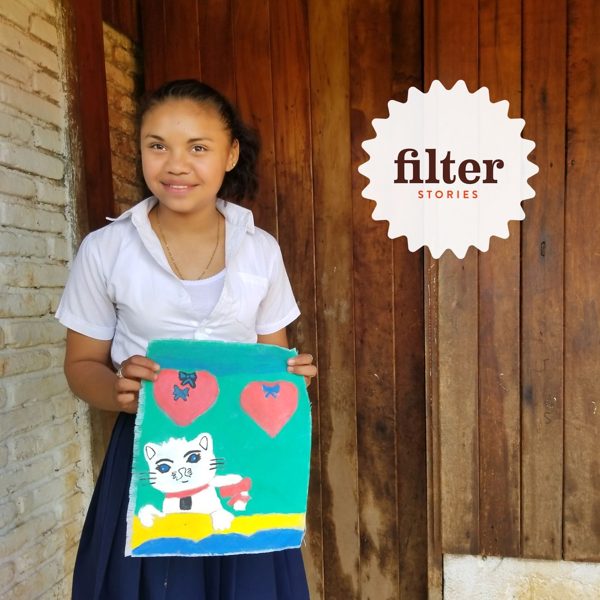 Human StoriesSofíaWhat were your dreams at 16? Sofía lives on a remote coffee farm in Nicaragua and hers is to be a great english translator.
 Human StoriesA Girl on a Coffee FarmSofía is a teenager living on a coffee farm and was going to school five days a week. But a year later, she’s studying only on Saturdays.
With Jools Walker, Scott Bentley and James Harper. Listen on Apple Podcasts or Spotify.