Show notes
Picture this: you're at the supermarket, perusing the wine aisle (after checking out the coffee one, of course), trying to choose between a £8 Spanish Rioja and a £10 French Merlot. Sound familiar?!
In this episode, we’re decanting the secrets of the wine world with Susie and Peter, creators of the Wine Blast podcast!
Scott and Jools don’t know much about wine but realise their biggest questions about it are the same ones they get about coffee. I.e. is really expensive wine is worth it? How much cash should you splash to get the tastiest tipple without breaking the bank? And of course… what's the best way to store wine?! Susie and Peter tell all!
However, a simple wine tasting could never be enough for Scott and Jools. Instead, they throw the gastronomy gauntlet down as they challenge the Masters of Wine to tell the difference between cheap coffee and the really good stuff. But Susie and Peter return the battle, testing our hosts' pallets with super expensive wine and supermarket plonk!
How will AIC vs Wine Blast turn out in the duel of the drinks?
Join Susie & Peter on a wine adventure on their Wine Blast podcast: https://link.filterstories.org/3Gc7aKw
Take this survey to tell what you want to hear in Series 3! https://link.filterstories.org/3lEZisx
Discover how much CO2 is produced in each litre of Oatly compared to cow's milk: https://link.filterstories.org/3aidSA3
Scott Bentley / Caffeine Magazine: https://link.filterstories.org/3oijQ91
Jools Walker / Lady Velo: https://link.filterstories.org/39VRGew
James Harper / Filter Stories: https://link.filterstories.org/2Mlkk0O
Coffees and wines featured in this episode:
Supermarket coffee - Sainsbury's Fairtrade Colombian Coffee, Taste the Difference, 227g for
£3.50
https://link.filterstories.org/33iFPaJ
Mid-priced specialty coffee - Origin Coffee Coffee Roasters, Los Altos, Washed coffee from Nicaragua, 250g for £9.00
https://link.filterstories.org/3tiT9H4
Best of Nicaragua coffee - Origin Coffee Roasters, Washed Casona Geisha from Mierisch family in Nicaragua.
No longer for sale.
£5 wine - Viña del Cura Rioja 2020, 13% (was £5 at time of recording, now £6.75, Tesco).
https://link.filterstories.org/3qYLjQd
£12 wine - Marqués de Riscal Rioja Reserva 2016, 14.3% (from £13.99, Majestic)
https://link.filterstories.org/3q9TASh
£30 wine - López de Heredia Viña Tondonia Rioja Reserva 2009, 13% (From £26.50, Majestic)
Read the transcript
Scott Bentley: Welcome to Adventures in Coffee, a podcast by Caffeine Magazine sponsored by Oatly.
Jools Walker: This is the final episode of the second series. As you know, I know it's sad time, sad times, but you know, this is where Scott and I explore the world of coffee for people who are quite curious about what's in their daily cup.
But in this episode, dear listener, the cup looks rather different today.
Scott Bentley: It's not really a cup though, Jools, is it? It’s a glass. We are spicing things up with wine!
Jools Walker: But we will get to the booze in a sec. Now I'm Jools Walker, and you should all know by now that I'm a very proud east Londoner, a cycling advocate and author and your very everyday coffee lover.
Scott Bentley: I am Scott Bentley. I'm the founder of Caffeine Magazine. I'm also an art director and yes, you'll know me for being the all round coffee dog.
Jools Walker: Now, before we get into the juiciness of this episode that we have for you, we actually want to hear from you. Now, we are in the middle of crafting series three and we've narrowed down a list of the episodes that we want to bring to you.
Scott Bentley: But what do you think, dear listener, are we missing something? Are we missing a trick? Jools, let's run through the list for our dear listener.
Jools Walker: Now we've got home roasting, so tasting coffee from across the world in your kitchen and how different origins compare to each other.
Scott Bentley: Yes, we are going to talk about coffee processing.
There is washed and naturals and loads and loads in between.
Jools Walker: Yes, you have coffee, so there's that whole thing with caffeine going on inside of it. But what is that thing doing to our brains?
Scott Bentley: What's in really cheap coffee. I mean, we talk about specialty coffee beans so great. What's in the cheap stuff?
Jools Walker: And we are going to ask that spicy question. Why do people hate dark rose so much?
Scott Bentley: Coffee myths. Oh come on! There are so many coffee myths. Everything from Kaldi, the goat herder through to putting coffee in your fridge.
Jools Walker: Another thing that we have on the list is cxffeeblack. Now they are the anti gentrification coffee club who are reclaiming coffee culture.
Scott Bentley: A lot of people will ask us, you know, I want a coffee machine. I want to buy this. You know, how much have I got to spend? There is a diminishing return when it comes to coffee equipment.
Jools Walker: Decaf and low calf. Now, where can you get delicious, low caffeine coffee from?
Scott Bentley: Death, death before decaf! So, yeah, is there something that you want to hear about? You know, do you want something different? Tell us in our survey and we have a link in the episode description, so come and tell us.
Jools Walker: Now, onto today's episode. Dear listener: wine. Now, as you know, because you join us on this journey, we go on a coffee journey together and learn about it.
But, we don't know anything about wine.
Scott Bentley: Absolutely. So we reached out to Susie and Peter and they've got this amazing podcast called Wine Blast. I really, really think you should go and check them out, it is really brilliant. And we really quickly realized after we reached out to them, they knew about as much about coffee as we did about wine, i.e. nothing.
Jools Walker: Now with Wine Blast, we answered the question: is really expensive wine actually worth it? How much should you actually be spending on your wine to get the best flavors without busting the bank? And the second question that we were dying to know the answer to in this episode: is how should you store your wine?
I mean, do you keep your wine in the cellar? That's if you're actually lucky and fortunate enough to have one. I'm saying I don't have a cellar in my house. If you're going to store your wine, is it supposed to be upright? Should you have your wine lying down? And how long should you even be storing those super special anniversary bottles of wine that maybe your great auntie gave you 10 years ago?
Scott Bentley: You know, where I store my wine, Jools?
Jools Walker: Are you going to say in your belly? Darling, I know you too, too well!
Scott Bentley: In my belly! Look, we could have done a really simple tasting and called it a day, but no! We wanted to see if Susie and Peter, by the way, these are masters of wine. That's the hardest gastronomical qualification in the world. Could they really tell the difference apart between a cheap supermarket coffee and the finest coffee to come out of Nicaragua in 2020?
Jools Walker: But equally, could humble old Scott and myself, a couple of uncultured scruffs that were plucked off of the streets, be able to tell apart the super expensive and the cheap supermarket plunk? You, dear listener, will soon find out.
Scott Bentley: So look, one day, we all got together. One cloudy, really quite grotty day in November, and we schlepped off to Origin Coffee Roasters in Southwark.
Jools Walker: And a big thank you to Origin Coffee Roasters as well for letting us have that space.
Scott Bentley: This was such a special occasion. In fact, I think James just wanted to get drunk. Our producer flew all the way from Berlin to come and do this session with us as as well.
Jools Walker: And you'll hear his lovely tones occasionally during the episode as well.
Scott Bentley: One more person we need to give a massive shout out to is Majestic Wine.So thank you to those guys who kindly donated the bottles of wine that we use in this episode. And if you want to send me any more wine, I'll be more than happy to have it delivered to my front door.
Jools Walker: Shameless scoundrel!
But first, a word from our sponsor. And this is a sustainability hack brought to you by Oatly.
Scott Bentley: Now Jools, are those new glasses you’ve got on there? I mean, you're always so on point when it comes to eyewear .
Jools Walker: Thank you kindly. Well, you know, people, people know me for my big glasses, but I actually wear a mixture of dead stock and pre-loved frames from the seventies and the eighties that I find online.
And you know what, by doing this and having sort of newish glasses by the time, I'm not actually contributing to more plastic being produced for my style choices.
Scott Bentley: Absolutely. And that kind of plays into a statistic that our friends at Oatly told us that about…That about 20% of our carbon footprint comes from just the new stuff that we buy.
So Jools, you're quite the queen of the upcycle. Aren't you?
Jools Walker: I am indeed. And a really lovely example of that is that me and Ian did a back garden up and we had to get stuff delivered from the gardening center. And it came in all of these big wooden pallets and our neighbors actually took the wooden pallets and upcycled them and turned them into planters in their allotment.
Scott Bentley: Oh, that's lovely. And do they kind of give you some of that fruit and veg back as well?
Jools Walker: Oh, they do. We've had a lovely crop of veg through from them. So we've had some leaks and we've had some marrows and pumpkins and then Mamma Velo has cooked them all up.
Scott Bentley: And then they go in my belly!
Jools Walker: One day, one day, they will go in your belly, I promise
Scott Bentley: It will happen.
Jools Walker: And that was a sustainability hack brought to you by Oatly. And now let's raise more than one glass and kick things off.
Peter Richards: Hi guys.
Scott Bentley: Hello Peter, hello Susie. So should we introduce ourselves?
Peter Richards: Sounds great. Okay. You go first.
Scott Bentley My name's Scott Bentley. I'm the founder of Caffeine Magazine. And as Jools loves to point out I'm an all round coffee dog.
Tell us about yourself, Peter.
Peter Richards: So I'm Peter Richards. I'm a Master of Wine and I'm going to see your coffee dog and I'm going to raise you a wine nerd.
Jools Walker: My name is Jools. Some people know me as Lady Velo on certain parts of the internet. Um, I'm very much your everyday coffee lover and most people will also know me for being that woman who likes to ride bikes and talk about them.
Susie Richards: And then there's me.
Susie Richards: I’m here too. I'm Susie, former actress. Also Master of Wine. What I am though is a non-coffee drinker. So I would say I haven't drunk coffee for probably a good 30 years.
Scott Bentley: Wow, I'm not sure if this is where I tell you to get out or whether I say good, another victim.
Peter Richards: So in the same way that Susie hasn't touched coffee for 30 years, which you guys I'm clearly seeing that you guys see that as a challenge. What about you guys with wine?
Scott Bentley: No, I haven’t touched that stuff. No… every Friday night!
Susie Richards: Lies, lies.
Jools Walker: But I'm not a wine expert in any way, shape or form.
Scott Bentley: Susie. Tell me, as to our dear listener, actually, you know, why are we here? I mean, I'm glad you're here and I'm glad you've bought the booze, but why are we here?
Susie Richards: Well, we're here… I mean, really the idea here is, you know, there's quite a bit of crossover between coffee and wine and what we thought would be great to kind of address the bigger questions or the questions we get asked, you get asked, you guys get asked, we get asked all the time about either wine or coffee. So the first thing we thought we'd look at is what we might call the “sweet spot” in terms of price versus quality. So, you know, from a wine point of view, what we're going to do is take a cheap wine, a moderately priced wine, and a more expensive wine, give them to you guys, see what you think, which do you prefer, you know, where does that sweet spot lie?
Peter Richards: How do I get the biggest bang for my buck when I'm buying this stuff.
Scott Bentley: Absolutely. And I think there's very much that there for coffee too. So we'll do the same with coffee and see how you guys get onto.
Susie Richards: We might look at storage as well. How best to store your wine or your coffee? I'm sure there are good ways and snot such good ways.
Peter Richards: Yeah, we're going to share with you some terrible things we do with coffee. Scott, I can see you sweating already.
Jools Walker: The panic, the panic.
Scott Bentley: It’s the espresso machines in this room. Not the rage, that's kind of like boiling inside of me, but you know, guys, you know, my throat's quite dry. Can you tell me to drink?
Peter Richards: We don't want to say, we don’t want to pressure you too early, but let's go. Let's go for it.
Scott Bentley: Susan, Peter currently are, you know, like running around, pulling glasses on wine out of boxes and bags.
Jools Walker: I've been passed my first glass of wine.
Susie Richards: Wine number one. These wines are all rioja. So they're all from the same region. They're all red wines.
They're different price points. So we've got £5. We've got £13, we've got £30.
Peter Richards: Maybe we should do a little bit of a very, very, very, very quick recap on how to taste wine. So Scott and Jools, you're both automatically doing something, which I always say to people, if you don't know anything about wine, the one thing you do is lift your glass up, tip it 45 degrees and just stare into it really hardly with a mixture of sort of anger, rage, a bit of rage and a bit of kind of intrigue.
And you do that in a wine bar. People think that this person knows that stuff, or you do that at a dinner party and people, your hosts will think, oh my God, I've got to get the best one out of myself because this person clearly knows what they're doing.
Scott Bentley: I'm holding the stem here. You don't, you don't use a claw hands around the, uh…
Susie Richards: That's absolutely right, you're so right, Scott.
So hold the stem. Literally, because what you really want is the temperature of the wine is in the glass. All that'll happen with your hand, depending on how hot your hands you've got, it'll warm up to the wine. So you don't want to warm up the wine, particularly if it's white, this is red, but particularly if it's white.
So the idea is that you just hold the stem, so the wine stays that same temperature.
Scott Bentley: So we've got this lovely wine in front of us is our first one. We've got three price points.
Susie Richards: So we've got £5. We've got £13 and the third one is £30, but we haven't said which order we've given you them. So, so this is one of the wines.
So it's either £5 or £13 or £30.
Scott Bentley: Where's the cheap one?
Peter Richards: Se're not going to give you any clues.
Scott Bentley: No, no, no. Where's the cheap wine?
Susie Richards: Yeah sorry, we start with five.
James Harper: Hey there. So you haven't heard my voice yet. I'm James, the producer behind Adventures in Coffee, and I'm jumping in to let you in on a little secret, what Scott and Jools don't know. So the first wine they’re tasting, this is the £5 wine, the cheapest.
Peter Richards: Talk us through what you're tasting or what you are smelling. What are your impressions?
Scott Bentley: I’m getting a little astringency. So it's a little bit dry.
Jools Walker: It tastes fruity to me. I'm not getting it doesn't feel for me, oaky. So it feels quite heavy.
Peter Richards: So I'm going to pull you the next wine. Now, wine number two. Still not telling you the prices.
James Harper: So for the £5 supermarket wine, Scott and Jools found it a little bit of stringent, quite fruity and not very oaky.
And now they're going to taste the mid-price wine £13.
Scott Bentley: You're going to hate what I'm going to say about this one. The aroma of this, it reminds me when I was a youngster, I would go down to the beach in Bournemouth. And, um, we would, we would always go pass the really cheap shop that would sell, like all the inflatables and all the postcards.
And this smells like the plastic blowup balls that you used to get on the side of the road.
Jools Walker: Wow, that’s specific.
Peter Richards: Was that a happy time for you, Scott?
Scott Bentley: It was an amazing time in my life.
Peter Richards: Isn't that wonderful though, about the way that these drinks can evoke very specific memories.
Scott Bentley: I love the way you're taking that as a positive feedback.
Susie Richards: Jools, what do you think?
Jools Walker: It doesn't smell as fruity as the first.
Susie Richards: Leaving aside plastic beach balls, what do you smell?
Jools Walker: It's got more of woody smell to me.
Peter Richards: Do you like that or not?
Jools Walker: I do, of the two. This one feels less sweet and I feel like I prefer this one of the two that we've just tried.
Scott Bentley: Absolutely, Jools. I definitely prefer this one. I think this one feels more refined. So the first small feels like if it was a painting, it was a big, thick brush stroke. This actually feels like it's a lot fine in its detail. It just has a, it has more of an elegance about it, I would say. The first one just felt a bit kind of like, boom.
James Harper: So Scott and Jools definitely prefer the mid-price wine, the £13 wine over the £5 supermarket wine. And that's because they found it less sweet and more refined. Okay. Now here's the most expensive, £30 wine.
Peter Richards: So here's wine number three.
Jools Walker: Now this one feels even woodier than the last one that I tried and I'm not getting lots of fruit.
Scott Bentley: But I'm getting the fruit at the end. I'm definitely getting more stringency with this one than the second one, but not as much as the first.
Susie Richards: So, you've had all three wines, which would you say is your favorite wine? One, two or three?
Jools Walker: It's three.
Scott Bentley: I quite like three.
Jools Walker: Number one now feels like it was far too sweet and almost too light. It didn't feel like it had a lot going on with it. Two and three feel like there are a lot more complex to me.
Susie Richards: So the second question is: which one do you think is which in terms of price?
Scott Bentley: I definitely think the first one was the £5. The other two though, I'm not sure because it might just be that I've got a cheap palate and Jools, you'll attest to that.
I think first one was fiv. Second one was 30. Third one was the mid-price thirteen.
Jools Walker: I think the first one was the five. I think the second one was the mid-price one and the third one was the most expensive one of the three.
Susie Richards: Well, we can reveal that, Jools, you were right in terms of price. So the first one, which you both absolutely nailed, um, you knew it was the £5.
Peter Richards: Can we just have a second to respect these guys performance?
Susie Richards: Very good. Would you rather actually given the price point, would you rather just buy one too?
Scott Bentley: I think I would be very happy with wine two.
Susie Richards: And is wine three worth the extra seventeen or whatever pounds?
Scott Bentley: Probably not in my opinion, but I don't understand it enough to warrant that.
Peter Richards: That's very fairly set because I think really to get the most out of that £30 wine, which is a really complex wine, you need to understand it. You need to understand the context of Rioja, what they're trying to do in that Rioja. How that wine has been made and why, therefore it should be worth this. Now, the first one we tried was is a young “joven Rioja”. So you make it, you pump it out, you don't eat it and you get it out.
Susie Richards: you know, they’ve kept as much sweet fruit as they can. All ripe fruit as they can to make it easy, easy drinking.
Peter Richards: It’s bold, but it's quite simple. There's not much extra stuff going on there. You just get that whack of fruit and then that's it, which is fine. If that's what you like.
Susie Richards: But, but let's, let's look at price in a different way. It's a £5 bottle. Now, if you look at how much wine you actually get in a £5 bottle, it's about 25 pens worth of wine, in a £5 bottle. If you go up, for example, to a £20 bottle, you would imagine that's four times as much. You're paying for the wine. Surely you get a pounds worth of wine. On a £20 bottle, you get approximately seven pounds worth of wine. So it's a huge difference.
Peter Richards: Just by paying that little bit more, what you're actually getting in terms of yield for the wine, the investment in the wine, the quality of the wine, therefore, it's a huge amount more because it costs the same to transport a cheap wine and an expensive wine.
Susie Richards: Exactly. And packaging might be a bit more expensive than an expensive wine, but your duties are the same, you know, your logistics are the same, there is so much that is the same.
Peter Richards: To describe the differences between the wine. The first one, very simple and fruity. The second one we have, which is the £12,99, which is a Maqués de Riscal Rioja Reserva, 2016. So the first one we had was a very young wine.
Susie Richards: 2020, literally a year old.
Peter Richards: So it's four years older, but that has, has been aged in Oak barrels. And that's been kept in the winery for at least three, four years. So you think again about the costs of tying up the amount of stock, Some of these Rioja wineries have thousands and thousands of barrels that they keep and are aging the wine for you. When it's shipped, it's ready for you to drink. So there's another difference there, which is the age of the wine. The third wine is 2009. So again, that's how old now? Do the math, you know, you're paying for a bit of age there.
What happens when a wine ages, it tends to… the fruit tends to drop out and you get much more of these what's called secondary or tertiary characteristics, like word like woodsmoke, mushroomy, earthy. The fruit became tobacco, the seed and the fruit becomes sort of dried fruit, but it's much less primary.
That's up to you, whether you like that or not.
I feel we need to bring on the coffee.
Susie Richards: I might stop bouncing off the walls though, because I genuinely haven't drank coffee for about 30 years. So it's a long time. I just, I just don't drink coffee, not for, not for reasons where I thought coffee was bad. So, very briefly, I, at one point went to the doctor and had high cholesterol and at that time I wasn't a big coffee drinker, but what I would drink is a tiny bit of coffee from Starbucks, with loads and loads of full fat milk in it. And I thought, well, if I cut out my coffees, no scientific evidence behind this but, I'd probably be able to lower my cholesterol. And so I sort of stopped drinking coffee and then just never went back to it.
Scott Bentley: But never thought that your cholesterol has anything to do with the full fat milk?
Peter Richards: So, in a way Susie's coffee intake was actually more milk and tea than coffee.
Susie Richards: So Scott, tell us what we're tasting in terms of the range of coffees.
Scott Bentley: So very much in the same vein as of what you presented in, in terms of the wine, I'm going to present to you three coffees. Now this is filter coffee. This is black. So we have no sugar, no milk. They've been brewed as a filter coffee.
It's coffee grounds. With hot water through a paper filter. Now I've got three coffees here. I'm going to give you, um, one, which is a supermarket coffee. This is priced at £3,50 for a bag, which I think is around 250 grams. So the second coffee is more expensive. This is going to be £9 for a bag of coffee.
So this is a speciality coffee. This is from our riends here at Origin Coffee Roasters. Our third one is quite an expensive coffee. This is going to be £30 for a bag of coffee. It's not even the same size bag. It's like half the size, so 125 grams.
Susie Richards: What's interesting, straight away. I know we we've got the three coffees in front of us. We have no idea, which is which. Completely different colors. So they go from a sort of a mid, almost certainly ruby brown to a deepest, slightly, what I describe as a nut brown to really dark. Well as sort of brown, black. Isn't it?
Peter Richards: Come on, bring it on. Bring on the coffee.
James Harper: So Scott and Jools have just served Peter and Susie, the first coffee in this tasting, and it is the mid priced specialty coffee, £9 a bag. The color is not dark and black ink. It's not light ruby brown, but it's the middle nut brown color.
Scott Bentley: Yeah. Give a sniff first.
Susie Richards: I get something a bit smokey there.
Peter Richards: There is sort of carrying a tiny bit of caramelization.
Susie Richards: A little bit of sort of a tobacco.
Scott Bentley: One of the things that I think is really important to talk about is how we talk about coffee and how it's all about wine.
Now, some of the words that we were using regarding the wine. If you use those words in coffee circles, there would have to be negative words. So if you were to say things like something tastes woody or something tastes to tobacco-y or something like that, often within specialty coffee, they're not words that we prize.
Now it's not to say the coffees don't taste like that. It's just that then often not the words that we prize.
Peter Richards: What are the terms, which are good? What, what do you look for in a good coffee?
Scott Bentley: So within specialty coffee, what we generally are looking for are fruits, brightness, sweetness. What we're usually not looking for is things like smokiness, ashiness, woodiness. We're looking for things which represent the fruits of the coffee bean. Often what we are trying to do is preserve as much of the origin of as a terroir.
Peter Richards: Fascinating. Okay.
Susie Richards: Thank you. Okay. So, um, with the filter coffee, I would love to put some milk in. And so that's the, you know, I don't know how good or bad that is.
Scott Bentley: Dairy, from a purist perspective, alters the flavor. And essentially what it does is it puts a blanket over the coffee. So it softens everything, which is really probably what a lot of people want when you're drinking an espresso. You want softness around the espresso because it's quite a tough drink to drink on its own.
However for myself, on filter coffee. You're right. It's more dilute. It's more subtle. I probably wouldn't want to put milk on that because it would soften it out too much. And I would lose a lot of what I was there to drink.
Susie Richards: I'm spending something slightly fruity now as well, actually. Um, it sort of just tastes like coffee.
It doesn't get me terribly excited. It's fine. I wouldn't stop my lifetime of no coffee for this. It doesn't it doesn't convert me.
James Harper: Okay. So for the speciality coffee, the £9 per bag, Susie and Peter found that a bit smokey, tobacco-y, some caramelization going on, some fruitiness towards the end, but Susie hasn't been convinced yet to embrace coffee again for her, it just tasted like coffee.
Now they're going to try £3,50 cheapest supermarket coffee.
Peter Richards: Okay, so that's that's number one. Can we have number two, please.
Scott Bentley: We can. So now how would you describe it since this is the color?
Susie Richards: This is the darkest one? Wasn't it? I think this is what I described as brown, black. This immediately smells more interesting to me.
I get more of a slightly kind of licorice and a sort of a bitter chocolate smell. It seems more intense.
Peter Richards: It's just seems a little bit softer. It just seems to have a little bit more intensity around this
Susie Richards: . So, yeah. It is so much more intense. And there's, there's like a, I don't know whether this is the right terminology, but like a citric note to its bitterness that's kind of refreshing and bitter. I would rather drink that. Definitely.
Scott Bentley: How are you feeling about these ones, Jools?
Jools Walker: The second one, a but too intense for me.
James Harper: Peter and Susie definitely preferred the £3,50 supermarket coffee over the £9 speciality coffee. They liked the fact that it had a licorice and bitter chocolate flavor. It was quite intense, a little bit citric. But now, what are they going to think about the most expensive coffee, 30 quid for half a bag.
Peter Richards: So we've got number three here, palest in color. That was pale.
Scott Bentley: Yeah.
Peter Richards: Almost get sort of herbal character, sort of green character from that one. Aromatically, something a bit odd as well.
Susie Richards: That both smells and tastes cheap, because I got a slight whiff immediately of that slightly stale instant coffee jar. Am I getting this all wrong? I probably am, oh gosh.
Peter Richards: Initial impressions at that last one you served us, Scott, was the least likely for me to want to have some more. I really hope that's the cheapest, stalest one.
Susie Richards: So my feeling is the third one definitely would be my least favorite. So I'm assuming that is maybe the cheapest one. Out of the first two, I appreciate both of them. Personally, given I would probably not have a coffee very often and I probably am looking for a little bit of extra coffee hits from it. I would probably go for number two as my choice.
Scott Bentley: And Peter, how do you feel in terms of preference and then what are the price points?
Peter Richards: I’m depressingly similar, I am afraid.
James Harper: So, Susan Peter said they prefer the £3,50 supermarket market coffee the most, followed by the £9 per bag speciality. But they disliked the most, the 30 quid coffee.
Scott Bentley: Can I just say one thing? Man you’re cheap dates. Well, the first coffee was our mid priced coffee. So you basically kind of nailed that. Our middle coffee, number two, that you both loved three pounds is a £3,50 coffee from the supermarket and the most expensive, the £30 coffee is the one that you dislike the most.
Peter Richards: Talk us through. What is that kind of funky flavor part of the appeal?
Scott Bentley: So the coffee you preferred was the second coffee, which was the cheap coffee. I think the reason that you like this is because it has a structure and it's what, you know. This is what you understand coffee to be. I think that's the same for many, many people, and there's nothing wrong with that.
And I think what the supermarkets do is they hit the nail on the head. They know what people want and give it to them for a good price. My problem with coffee number two is that I believe this to be rather generic. And I also believe there's very little nuance on this. I also believe that it's darkly roasted for consistency.
Some of the things that, both myself and also James kind of noted was that there are certain defects within that, within that coffee. And, it's not always something which is really, really obvious. And I think one of the things that roasting a coffee darker tends to do is to make things taste a little bit more generic.
So, it's, it's more difficult to pick out those nuances because everything has sort of been flattened off. And so any, any sort of defects, any sort of nuance just gets kind of pushed down a bit. Number one, which I think was kind of both of yours second favorite, this is a good mid price coffee that has been well sourced.
James Harper: Scott's referring to the £9 per bag speciality coffee.
Scott Bentley: This coffee would probably have been bought, the green coffee, the raw ingredients of it. They've probably been paid like £5 a kilo for this coffee. The second coffee that you both liked better.
James Harper: The £3,50 supermarket coffee.
Scott Bentley: That was probably a lot less. That was probably less than £2 a kilo for the raw ingredients. But I think what we're really interested in here is why do you not like the third coffee, the really, really expensive coffee. From a panel of judges, but worldwide, super respected judges, this was the best coffee that came out of Honduras. This is coffee, that in the marketplace is highly, highly revered by coffee snobs, because it's so different.
Susie Richards: But does different make it good?
Scott Bentley: This is your decision to make.
Susie Richards: Do you like it?
Scott Bentley: I do like it.
Peter Richards: How would you describe it?
Scott Bentley: This coffee specifically is a Geisha varietal. So the bean is a different breed of being much in a way like a Cox's Pippin apple versus a granny smith.
Peter Richards: Or a Merlot versus a Cabernet Sauvignon?
Scott Bentley: A 100%. So this is essentially a Geisha coffee. It is very difficult to grow. It's only grown at very high altitudes. It takes a lot of blood, sweat, and tears to make this coffee. But this coffee often produces quite floral notes. You said herby, which is great because yes, it does have herbal qualities to it. And for many people, this isn't coffee. For many people, this is more tea-like, but I think the thing is here is not what you expect.
Peter Richards: I think you've confounded our expectations and our expectations are pretty basic. Susie hasn't joined with stuff for a long time. I'm no expert. And I think absolutely the second coffee was just similar to what we were expecting.
Susie Richards: But I think, you know, it's like we could get you not, we could get used to it, but we would probably get used to it.
And we'd probably quickly get beyond number two and say, oh, I've heard that so many times, it all tastes the same. Actually, I am looking for some nuance and some subtlety. You know, I remember the first time that I was introduced to Earl Grey tea, as opposed to, you know, builders and it was a bit weird, you know, a bit flowery. If anything, I'm not sure about this now. Years later, I love Earl Grey. So I think it's a journey. Isn't it?
Jools Walker: So I'll have a question in regards to storing wine. So we have a very old bottle of wine at home. We have a 1974 bottle of Barolo that Ian was given it on his 40th birthday, seven years ago.
Peter Richards: And Ian is, just so just to clarify, your partner?
Jools Walker: He’s my partner. And I genuinely don't know if we've been storing it correctly.
And all we knew to do was put it in a dark place and somewhere that's not too cold and not too hot. So it has lived in a cupboard in our house, lying down. It's like it was, was that correct? We don't know. And then we got paranoid about keeping it in that cupboard. So we moved it to the drinks cabinet. Now it's standing up and now we have this paranoia.
It's, it's not in any way that it's like, we don't have a temperature controlled room that it's in or anything like that at all.
Peter Richards: I am sensing a lot of anxiety. Wine should never make you anxious.
Susie Richards: I think one of the things, that's the hardest thing when you are given or you buy, and it's usually given, an amazing bottle of wine that, you know, has cost a lot of money.
What do I do with it? And when do I drink it? When do we open that bottle of wine? And I would say that in terms of storage, you've done absolutely fine. If you know, you're going to drink it, that's actually fine. In an ideal, ideal world, you know, which none of us live in, would be to have it in a cellar at about 12 degrees C, at about 65% humidity, you know, lying on its side. It doesn’t have to be. Most people store their wine lying on the side. It's quite convenient. Doesn't have to be as long as you're not somewhere where it's really dry, drying. So you're not, if you've got the humidity or you've got the cooler temperature. It will be fine because the cork is not going to dry out.
That's the only worry, that the cork dries out and too much air gets in and oxidizes the wine. So on the whole, if you've left it standing up, it should be fine, equally if it's on its side, it would be fine. The question really is when you drink it and you've got a Barola that's 1974, that is, you know, how old now? 46, 47 years, old years old?
Scott Bentley: And how long have you had this, Jools?
Jools Walker: It's been seven years, seven years.
Peter Richards: And why you haven't drunk it in that time?
Jools Walker: You know what, it's one of these things again, where just, as you said, if it's something expensive that's been gifted to you, we're going to save it for a special occasion.
And it's like, right. There was the idea that he was actually going to open it on his 40th birthday when he was presented with her. But then it was that whole, no, we'll put it down and keep it for something else. We don't know what that something else has been. There's been like Christmases, where we thought we'll have that.
And it's like, no, maybe Christmas isn't the occasion for it.
Peter Richards: I'm going to tell you two things now, Jools. The first thing is that good wine is not for good days. Good wine can be for bad days. In fact, why don't we just do that? Makes a bad day so much better. If you've got a pack of Pringles you want to have it with, and you’re feeling really bad and you both want to have something to lift your mood. That's the time to have it.
The second thing is this. I did do a little bit of research on 1974, because a little bird did tell me you had this bottle. Can I read you what Decanter said about the 1974 vintage, which is a wine magazine and website.
Jools Walker: Do I need to stick my fingers in my ears?
Peter Richards: No, because it will be funny.
Snowy winter, late spring, hot and dry summer, mild autumn. Wines were fairly firm and tanic with low acidity, but good rich fruit. That's all by the by, this was the killer line. This was a good medium term drinking vintage, which should have all been drunk up by now. Now, I am sure that your bottle will still be fine. But, Jools, you need to drink it.
Susie Richards: What you're going to need to do though, is quite carefully decant it and then drink it quickly because that wine is very fragile. Now, it's 42 years old, however many years old, it will deteriorate immediately that you open it. So just very carefully, but swiftly decant it. Get that sediment, you know, leave the sediment in the bottom of the bottle and just drink it.
So enough about wine storage. What we really want to know is how do you store your coffee perfectly?
Peter Richards: We've got coffees we've had for…
Susie Richards: No, no. Don't say that. No, let's just listen to Scott and Jools.
Scott Bentley: What I would say, actually on the whole, fresher is better with coffee. So, what you'll find is that once the coffee has been roasted, it's essentially degassing.
There's like, you know, carbon dioxide is coming out of the beans and essentially is going stale. So you really want to use coffee relatively quickly. And I would say within a few months, and the reason I say: don't look at the best before date is because supermarkets is where people buy a coffee a lot of the time, they essentially want to leave that on the shelf for as longer period of time as possible.
But if you see a roasted date, you know, when it’s roasted. Calculate three months off of that and you’re really in the sweet spot for coffee.
Peter Richards: Okay. So it's almost the opposite to wine. Good wine should develop and improved with age. Coffee's the opposite. So you're talking about even a really fine, really expensive coffee needs to be super fresh?
Susie Richards: Absolutely. And if I've got this lovely coffee that somebody has given me, what do I do with it? If I, say, I am given it, I open it, make a cup of coffee, a pot of coffee, and then I want to drink it over the next three months. What's the best way of looking after it?
Scott Bentley: Okay. I'll tell you the worst thing that you could possibly do is to open it and leave it in your fridge.
Peter Richards: Can we just pause there, Scott? So Susie, you know…That's something we absolutely do. We open a nice bag of coffee that someone's given us…
Susie Richards: We put a little peg on it and we put it in the fridge.
Peter Richards: We leave it on the fridge, and then we'll revisit it about six months later.
Susie Richards: Yup, when somebody comes around and wants a cup of coffee.
Peter Richards: And then we’ll repeat the process, probably for a couple years.
Scott Bentley: Firstly, if you can have whole bean, rather than pre-ground, that's always better. Because as soon as you grind the coffee, you're exposing a large surface area for the oxygenation of that coffee. So if you can keep it whole bean, that's always going to be better. And the reason I always say, please don't put coffee in a fridge is because essentially the fridge is a moist atmosphere. And so the water gets into the coffee. Not only that fridges are very smelly places, and you have a substance, which is desperate to sucking water, sucking smells, and that's what it does.
Peter Richards: Now that you say that I think our coffee has been tasting a bit of celery. Given clearly we've been drinking bad coffee for a while, you know, is it gonna, is it going to harm you? And what’s the signs of a stale coffee? What should we be looking out for freshness versus staleness?
Scott Bentley: So, essentially stale coffee will taste flat. It'll taste, you know, generic, very uninteresting.
Peter Richards: Well, this might explain why we haven't been so keen on coffee. If we've just been drinking bad coffee for a long time.
Susie Richards: I think you're absolutely right. But if they're not keeping it in the fridge, just in a cupboard, then a dark…
Scott Bentley: hundred percent. Airtight container, if possible. And you know, just out of sunlight and in an airtight container and you're pretty good to go.
Peter Richards: And actually, it's not that we haven't been drinking the right coffee. It's just that we may have been drinking the right coffee, but we've stored it wrong.
Scott Bentley: Or just sort of for too long. Just try to keep it, no longer than it's really good for.
Peter Richards: Fantastic.Thank you.
Jools Walker: Well, this has been an absolute pleasure at experiencing the different facets of wine with the glasses, the temperature, everything, but my burning question that I have to ask, Susie, we brought you over to the coffee side, is this a coffee revolution for you?
Susie Richards: Do you know, this has been so fascinating and maybe more of a treat because I haven't drunk coffee for so long, I'm coming at it completely fresh. And I will definitely, I promise you, add coffee into my drinking repertoire in the future.
Peter Richards: There's a lot to learn. I think the one thing we know now is there's a lot to learn, but actually we're intrigued. So I think we'll go away and we'll start experimenting and having some fun with coffee. So thank you guys.
Scott Bentley: And do you know what? I might actually spend a bit more, once on wine now. I think my £5 budget might have been bumped to at least 10.
Peter Richards: I think Jools obviously knows everything about wine. You can ask her as well in the future.
Scott Bentley: Guys, thank you so, so much for your time for your expertise and thank you very much for giving me very slight tipsy.
Peter Richards: Likewise, it has been an absolute pleasure. Thank you so much, guys.
Jools Walker: Ah, dear listener. Thank you so much for listening to our first collaborative episode. Did you like it? Do you want to hear some more episodes like this in series three? Well, then tell us in the survey, the link is in the show notes.
Scott Bentley: And if you want to try the wines and coffees, we've also linked those in the show notes too.
Jools Walker: You should absolutely check out Wine Blast. Now, if you're somebody who enjoys discovering new flavors, go and check out Susie and Peter's most excellent podcasts. And we've also linked to that in the show notes too.
Scott Bentley: When you get there, you can ask them, are they still storing their coffee in the fridge?
Jools Walker: If you like the show, please tell a friend! Just think for a moment who would love a podcast about coffee?
Is it your mum? Is it Sharon in accounts? Your mate Dave down the pub. Just tell them about Adventures in Coffee.
Scott Bentley: You can do it in many ways. You'll hop on Instagram, tell your friends about the show. Create an Instagram story from a screen grab and tag us in it. Tag in @caffeinemag, @ladyvelo and James, @filterstoriespocast and do you know what? We'll repost it.
Jools Walker: And if you listen on Spotify, did you know that you can actually rate shows now? So go and give us a five-star rating. Cause that will also help other people find the show too.
Scott Bentley: Now, this podcast was produced by James Harper, the creator of the coffee podcast series Filter Stories.
Jools Walker: And he also wrote in plays that piano music that you hear tinkling away in the background. Now, Scott, this is the end of series two. Babes, when are we back?
Scott Bentley: Very soon my dear, very soon indeed. We have a bonus episode lined up for you, and then we're planning to be back in your feed, regular as clockwork from February onwards.
Jools Walker: But until then, stay hydrated, drink wine, and drink coffee, and we will see you soon.
Scott Bentley: Bye bye.
From Filter Stories
You might also like
 The Science of CoffeeDo you and I taste the same flavours?Ever wonder why you and your friends can taste the same coffee, but you can’t agree on the flavour notes?
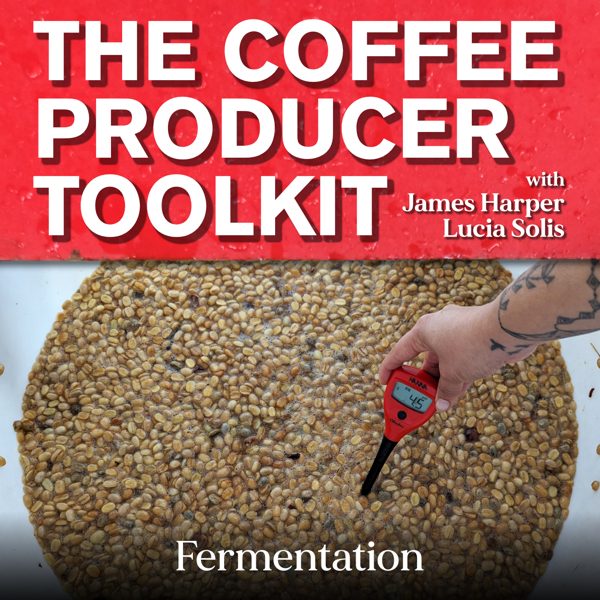 The Coffee Producer ToolkitFermentation, Pt 1 — Nature's lottery and coffee's 3,000-year lagThis episode explores why coffee is only fifteen years into a fermentation revolution that wine and bread went through millennia ago, what's actually happening inside the tank when microbes…
With Jools Walker, Scott Bentley and James Harper. Listen on Apple Podcasts or Spotify.