Show notes
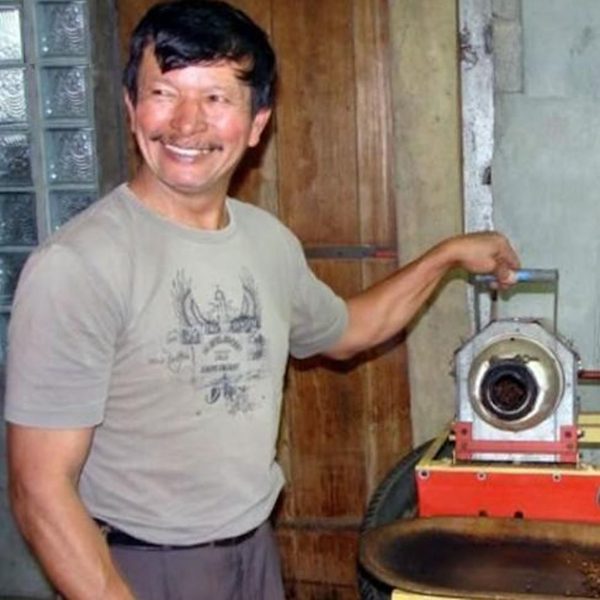
Hector “tito” Vargas passed away in December 2019.
We honor him by playing the season finale of the Duolingo Spanish Podcast.
Correction: Tito passed away from a gunshot wound and not a heart attack. It's unknown at this stage whether it was suicide or murder.
Visiting Panama? I recommend Oscar as your guide: http://muchogustopanama.com/
Read the transcript
James Harper
Hi friends.
I have some sad news.
Our hero, Tito Vargas, he passed away this week from a heart attack.
He was 59.
Tito's story is a very special story.
It's actually the most downloaded episode of Filter Stories.
And I think one of the reasons is because it's so heartwarming.
And it shows what life is like if you are a marginalised farmer trying to make it in coffee in Panama.
Tito's story led to a collaboration with the Duolingo podcast, you know, the language learning app.
They loved it so much, it became the season finale this year.
And I'm really happy that while Tito was alive, he could see that his story was shared to many tens of thousands of people.
Tito's Duolingo story was the first time that Filter Stories collaborated with a major podcast, and it helped bring attention to the struggles of many coffee growers.
And this success actually helped lead to another success.
Filter Stories has been nominated for a Sprudgy.
Sprudge is a coffee news website, and it's a real honour to be nominated as one of 2019's best coffee podcasts.
I'd be really happy if you could take a moment to vote for Filter Stories.
There's a link in the episode description.
This nomination is testament to the extraordinary people like Tito, who have remarkable lives and share them with me unreservedly.
And people like you who take the time to listen.
And so let's honour Tito by listening to the season finale of the Duolingo Spanish podcast, El Milagro del Café.
Martina Castro
I, like many people, wake up to a very specific routine.
Brewing my cup of coffee.
You might actually be drinking some right now.
But have you ever stopped to think about where that coffee comes from?
The path that coffee took to get to your cup arguably starts with a man like Tito Vargas.
The coffee trees on Tito's farm flower once a year for three days.
Dozens of tiny white flowers burst open on every coffee branch.
And it's as if the farm is covered in snow.
Tito grew up in Boquete, a town about a thousand metres high on the side of the Barú volcano.
The tallest mountain in Panama.
His parents worked on coffee plantations and Tito's dream since he was a kid was to have one of his own.
His parents figured this was just a childish fantasy.
Tito's path wasn't only difficult, it was torturous.
Each step forward would result in two steps back.
To succeed at his dream, Tito was going to need persistence and something of a miracle.
Bienvenidos and welcome to the Duolingo Spanish podcast.
I'm Martina Castro.
Every episode we bring you fascinating, true stories to help you improve your Spanish listening and gain new perspectives on the world.
The storyteller will be using intermediate Spanish and I'll be chiming in for context in English.
If you miss something, you can always get back and listen again.
And we also offer full transcripts at podcast.duolingo.com.
Tito Vargas
Mi pueblo es un lugar excelente para cultivar café porque es muy alto y sus tierras son muy fértiles.
Aquí se ha cultivado café desde inicios del siglo XIX.
Martina Castro
In the grand scheme of things, Panamanian coffee is tiny.
It's less than one percent of Panamanian exports and less than a percent of global coffee production.
But coffee often tastes better when it's grown at high altitudes, so Boquete has always had a good reputation for its beans.
Tito Vargas
Yo vengo de una familia humilde.
Mis padres nunca tuvieron tierra y siempre trabajaron para otras personas.
Eran estrictos, pero muy afectuosos.
Trabajaban muy duro para darnos una mejor vida a mí, a mis tres hermanos y a mis dos hermanas.
Martina Castro
Tito's mother, Rosa, looked after the house, cooking and cleaning.
Occasionally, she sold homemade food in town and washed clothes to earn some extra money.
She also worked in coffee plantations during harvest time, or la cosecha.
Tito Vargas
Mi padre, Alfredo, trabajaba muy duro en las plantaciones de café, seis días a la semana.
Él me enseñó la importancia de trabajar y ser responsable.
Yo admiraba bastante a mis padres y los quería muchísimo.
Martina Castro
Tito's father wasn't paid much to work at the coffee plantation, about $25 a week back in the 70s, but it was enough to live on and send their children to school.
They even were able to save a bit of money.
When Tito was a teenager in the 70s, he found ways to get money working on farms.
Saturdays, Sundays, after school.
When he was 16 or 17, he worked as a taxi driver, a welder, an electrician.
With the money he made, he managed to buy two trucks.
Tito Vargas
Cuando terminé la escuela me di cuenta de algo.
Si sumaba todo mi dinero ahorrado y vendía uno de mis camiones, podía llegar a tener unos $15,000.
Era demasiado dinero para dejarlo en la universidad, pero podía usarlo para cumplir mi sueño.
Martina Castro
When he spoke to his dad about using that savings to buy a farm, Tito told him it could be a great place for him to retire.
But his dad said, this money should be for your education.
Don't spend it on an old man like me.
Your future is more important.
Tito Vargas
Yo hice todo lo contrario, y a principios de los años ochenta compré una finca.
Originalmente eran tres hectáreas para criar vacas.
Me gustó porque tenía un río pequeñito, pero no me gustan las vacas.
Me dan miedo.
Así que las vendí rápidamente.
Martina Castro
The night Tito signed the deed on his new plot of land, it was time to tell his parents what he had done.
Two of his younger siblings and his parents were sitting around the table.
The TV in the corner was humming with the news.
They were eating red beans, meat and rice.
A typical dinner.
Tito Vargas
La verdad, yo tenía mucho miedo.
Estaba nervioso.
Las manos me sudaban y mi corazón corría a mil por hora.
No sabía cómo iban a reaccionar.
Cuando se los dije, puse el contrato firmado sobre la mesa para demostrar que todo era verdad.
Martina Castro
Tito's parents just continued eating in silence until they were done.
They didn't have to say anything.
Tito knew they were disappointed.
But what was done was done.
Tito Vargas
Durante casi dos años, mi padre no conoció la finca.
Ellos pensaban que era algo temporal, pero yo les iba a demostrar que mi decisión era mejor que ir a la universidad.
Martina Castro
Tito began by planting vegetables.
He bought some orange trees, and his friends gifted him banana trees.
He didn't plant much coffee initially, because it was expensive, but his goal was to eventually cover the farm in coffee trees.
Tito Vargas
Los árboles de café son pequeños.
Algunos crecen algo más de dos metros y otros mucho menos.
Tienen troncos y ramas delgadas, con hojas tan largas como la palma de una mano.
Martina Castro
Coffee is similar in some ways to cherries.
They even call them cerezas de café.
There's a pip, a seed on the inside of a sweet fruit the size of a little cherry.
Then you take out the seed, roast, and grind it to make coffee.
Tito Vargas
Plantar café iba a tomar tiempo y dinero, pero más importante que eso, yo necesitaba la experiencia de mi papá.
Él sabía cómo cultivar el café, y yo no realmente.
Martina Castro
As the years wore on, his parents began to realize that the farm wasn't a passing phase.
Tito was serious about making a living off of it.
So one day, his father finally agreed to help him.
It was a Sunday, and he was dressed in his church clothes.
Nice shoes, a clean shirt.
Tito Vargas
Salimos muy temprano por la mañana junto con el sol, y caminamos montaña arriba durante 90 minutos.
Mi papá vio la granja y le gustó.
Fue una mañana fantástica.
Caminamos e hicimos planes juntos.
Martina Castro
At 10 a.m., they opened a bottle of scotch and raised their glasses to their new venture.
Tito Vargas
Mi padre era mi mejor amigo y mi maestro.
Yo estaba muy feliz porque él iba a poder retirarse en esa finca y estar más tiempo conmigo.
Por fin íbamos a ver los frutos de su trabajo en una tierra de nuestra familia.
Martina Castro
Tito's father wasn't sure what variety of coffee would work on a farm as high in the mountains as Tito's.
The same variety of coffee will perform quite differently depending on where it's grown.
Tito Vargas
Mi padre me recomendó plantar diferentes variedades de café para tener más posibilidades.
Martina Castro
And so Tito and his father began planting different varieties of coffee, geisha, caturra, and others.
Each has its pros and cons.
Caturra, for example, produces more coffee overall, but it's susceptible to many diseases.
Geisha, which has no relation to the geishas of Japan, resists certain strains of disease, but overall produces less coffee.
Tito Vargas
Pasaron alrededor de 15 años antes de poder llenar la finca de árboles de café, porque los plantamos poco a poco.
Martina Castro
Tito couldn't make money from the farm immediately.
Each new coffee tree takes three years before it begins producing enough beans.
That's why during the day he worked on the farm, and at night, he worked as a taxi driver.
But Tito couldn't celebrate, because by that time, the price of coffee had collapsed.
That's because for many years, there was an international coffee agreement, a cartel, that would limit coffee output as soon as prices dipped too low.
The cartel had stopped working.
The price of coffee fell lower and lower, with no end in sight.
Tito's friends were graduating, and they were doing fine.
But Tito felt he wasn't.
His father suggested Tito keep the farm and treat it as a hobby.
Don't invest much time or money.
Just let it be, he said.
Abandoned or undermanaged farms are very common across Central America, during hard economic times.
But after a year of being on sale, there was not a single buyer.
Which was understandable, really.
Who would want to buy an unprofitable coffee farm?
So Tito started reconsidering an idea he had ruled out years before, because it was just so crazy, to process his own coffee.
We'll get right back to the story in just a moment.
But first, we want to tell you about a great way to support this podcast and continue practicing your Spanish.
If you haven't already tried Duolingo, you can download it today and learn over 30 languages completely free.
For even more convenience, like offline lessons and an ad-free learning experience, upgrade to Duolingo Plus.
You can start your 7-day free trial of Duolingo Plus by going to duolingo.com slash get plus.
Your subscription supports free content that you already know and love, like this podcast.
Thanks, and now let's get back to the story.
Instead of selling his coffee cherries to the molinos, or mills, that then sell to the roasters, Tito wanted to cut out the middlemen and go straight to roasting his own coffee.
Once he was denied the loans he needed to buy machines, Tito decided he would build each machine on his own.
He didn't have any money or blueprints.
He had to figure it out by himself, with whatever scrap parts he could find.
For example, one of the many machines he needed was a coffee roaster.
The first time he used it, he put it behind a wall for protection.
It was a long process of trial and error.
To get roasted coffee from freshly picked cherries, you need so many machines.
A wet mill with washing tanks and depulpers, a dry mill to husk the coffee out of its dry parchment, a sample roaster, a full-sized roaster, industrial coffee grinder, label printers, bag sealers.
Now, it was just Tito and his bizarre handmade machines.
The depulper, for example, was a stream of water hurling coffee down inverted pyramids through a giant corkscrew into a three-foot hamster wheel, with scrubbed coffee eventually splashing into a tub of water.
Tito's friends were making fun of him because of this.
Finally, he was producing coffee, but now he couldn't sell it.
To make them stop, he had another crazy idea.
He was going to sell his coffee in Japan.
But it wasn't entirely a joke.
Japan is a big export market for coffee, much like Europe and the U.S. Tito thought he needed to export his coffee somewhere, so he realized he needed an export license.
Tito Vargas
Soon after, his mother also passed away.
Martina Castro
All this time, Tito was living in his parents' home and seeing them every day.
Now they were gone.
And he was almost ready to export his coffee.
The coffee farm his father helped him create was finally about to be profitable.
But just as he was getting his export papers in order, the price of coffee collapsed again.
In the early 90s, Vietnam's government promoted intense growth in coffee farming, and within a matter of years, the world was full of less expensive Vietnamese coffees.
By the end of the 1990s, this oversupply caused the price to plummet.
People made offers, but Tito had second thoughts.
Now this farm stood for something much more valuable — his connection with his dad.
Around this time, tourism was booming in Panama, so Tito started offering coffee farm tours.
After one of the tours, one of his guests, a man from Japan, introduced himself as a coffee buyer.
Geisha is the varietal that Tito's dad suggested they plant to hedge their bets.
But Tito had heard so many people say they were interested in buying, and not end up buying anything, that he didn't expect much from this visitor.
It turns out that the Geisha variety had just smashed world records.
Growers had figured out that when it's grown at high altitudes, like Boquete's volcanic soils, it explodes with flavor.
It's like putting your nose into a freshly picked bouquet of flowers.
Nowadays, Geisha regularly smashes auction records, and World Barista Champions will often choose Geisha to pull the best-tasting espressos in the world.
The farm that Tito struggled to maintain, and at points even to sell, is now some of the most highly-prized coffee-growing land in the world.
He has joined an incredibly small group of coffee farmers who sell their entire harvest even before the coffee beans are picked.
It was the first time he had ever bought a plane ticket, for pleasure.
Hector Tito Vargas is a coffee farmer in Panama.
His farm is called La Milagrosa, or The Miraculous.
This story was produced by James Harper, the host and producer of Filter Stories, a storytelling podcast about coffee.
You can find a link to it at podcast.duolingo.com.
This is our last story of this season, but we'll be back with more new episodes soon.
In the meantime, we'd love to know what you thought of the stories we've brought to you so far.
You can send us an email with your feedback at podcast at duolingo.com.
You can also subscribe at Apple Podcasts or your favorite listening app so you never miss an episode.
This podcast, like everything Duolingo does, was made possible by the ongoing support of Duolingo Plus subscribers.
With Duolingo Plus, you can learn Spanish and over 30 other languages, as well as access amazing features like offline lessons for when you travel.
You can get a seven-day free trial of Duolingo Plus right now by going to duolingo.com slash get plus to sign up.
Again, that's duolingo.com slash get plus.
The Duolingo Spanish podcast is produced by Duolingo and Adonde Media.
Our editors include Megan McDowell, Marco Aviles, and Sarah Barrett.
Our supervising editor is Catalina May.
Our mixers include Ana Lucia Murillo, Maria Muriel, and Claire Mullin.
Our sound design and mastering engineer is Martin Cruz Farga, and our production manager is Mariano Pachella.
Our editorial assistant is Grant Fuller.
Our story hunter is Lucia Villavicencio.
The music in this podcast is by Blue Dot Sessions.
I'm the executive producer, Martina Castro.
Listen on Apple Podcasts, Spotify, Pocket Casts or your favourite app.
More from Human Stories
See allIs your coffee building Trump’s wall? Part 5: How can we support marginalised coffee producers?
You buying a coffee from El Salvador and Trump building a border wall have nothing in common.
Is your coffee building Trump’s Wall? Part 4: The Rich and the Marginalised
You buying a coffee from El Salvador and Trump building a border wall have nothing in common.
Is your coffee building Trump’s wall? Part 3: Requiem for a Coffee Republic
You buying a coffee from El Salvador and Trump building a border wall have nothing in common.